The Technical SEO Audit Checklist Every D2C Brand Skips
Crawlability and indexation, before content gets a chance. The quiet technical debt that caps organic growth.
Most SEO conversations start with keywords and content calendars. For a D2C site with a real product catalog, that is usually the wrong place to start. If Google cannot efficiently crawl and index the site, no amount of content work changes the outcome, because pages that are not indexed are not in the running at all.
Why technical comes before content
Content quality and technical health answer two different questions. Content answers "is this the best page for this query." Technical health answers "does this page even get evaluated for that question in the first place." A brilliant product description sitting behind a broken canonical tag, an accidental noindex, or a crawl trap never gets to compete, because it is invisible to the systems doing the ranking.
Crawlability and indexation
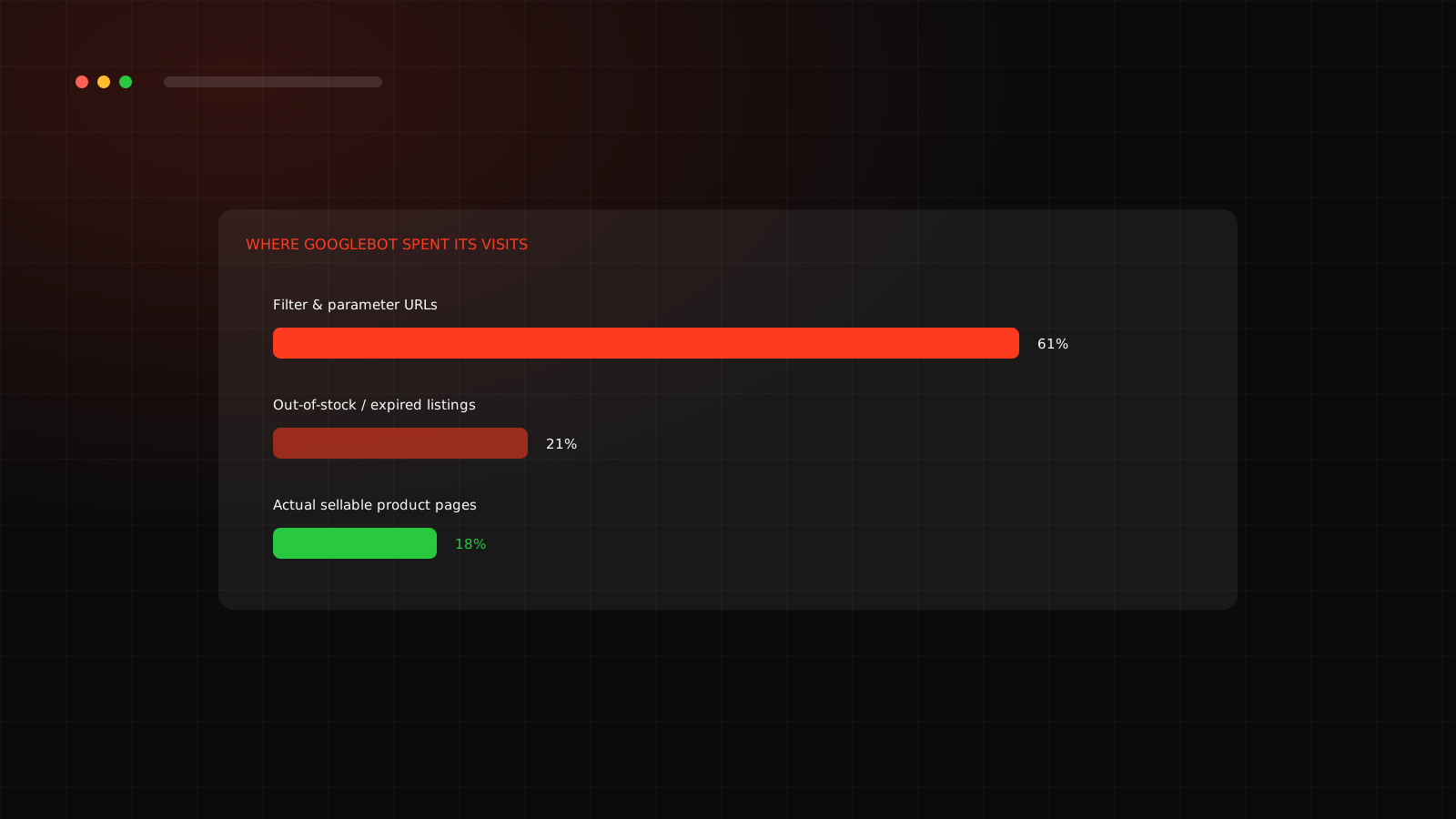
Google's own Search Central documentation frames crawl budget as a balance of two things: crawl rate limit (how fast Googlebot can hit the server without causing problems) and crawl demand (how much Google actually wants to crawl based on the page's perceived value and freshness). This becomes a real constraint once a site has thousands of URLs, which happens fast on ecommerce once color, size and filter combinations start generating their own URLs. A product with five colors and four sizes can spawn twenty crawlable variants of a single listing, most of them offering nothing a search engine, or a customer, actually needs indexed separately.
The audit checklist
How often to actually run this
Quarterly is a reasonable baseline for a catalog that changes regularly, but the trigger that matters most is any platform, theme, CDN or hosting migration. Those events silently reset robots rules, canonical logic and redirect maps far more often than teams expect, and the damage usually surfaces as a slow bleed in organic traffic weeks later rather than an obvious break on day one.
Want this audited properly, not assumed?
We run the full technical pass before any content or keyword work starts.
Two of the items on this checklist deserve their own deeper look: crawl budget specifically, covered in why Google isn't indexing your new product pages, and canonical tags, covered through a real audit we ran on our own site in this case study.
Frequently asked questions
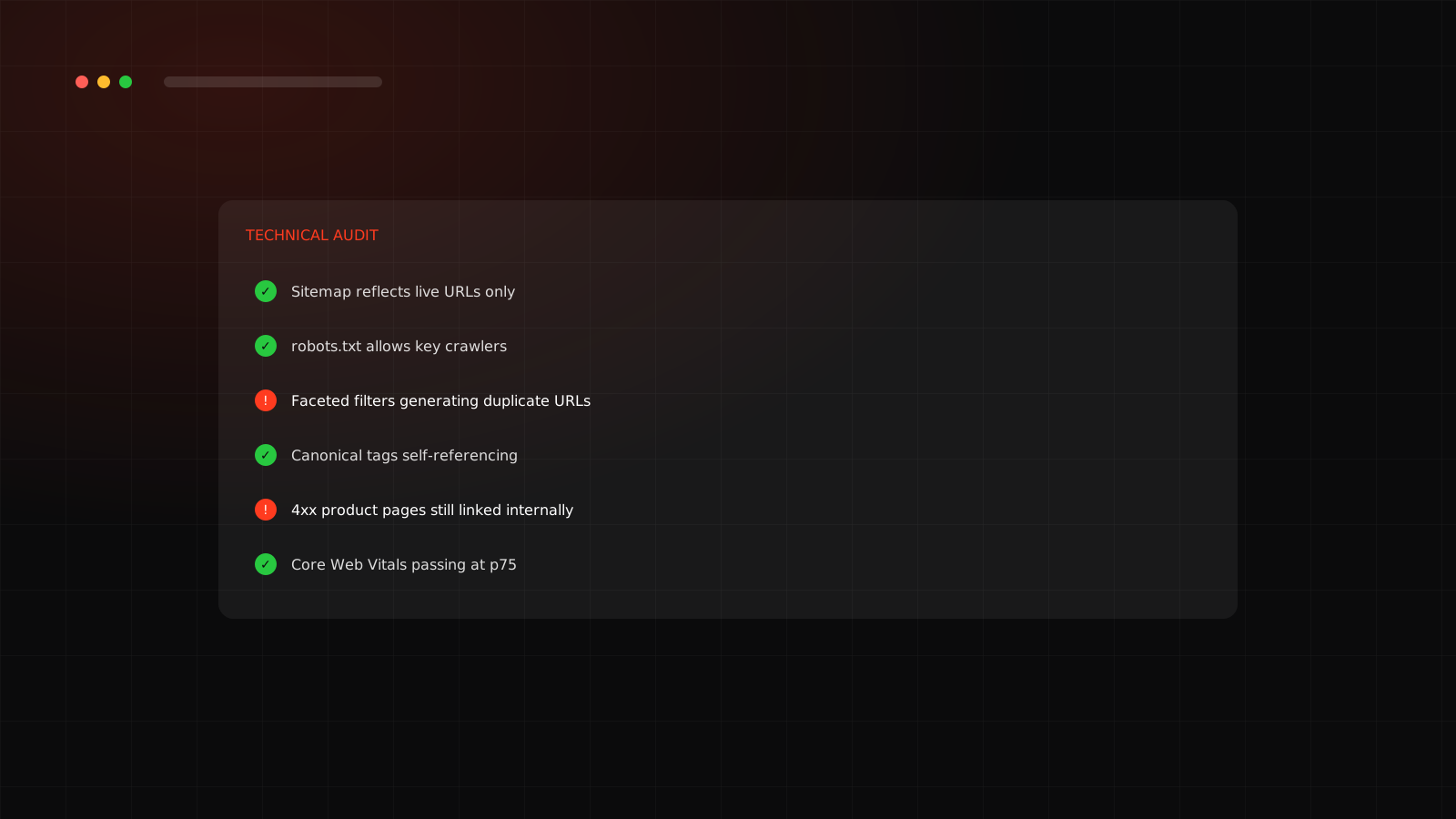
A structured check of whether search engines can actually crawl, render and index a site correctly: sitemap accuracy, robots.txt rules, canonical tags, redirect chains, Core Web Vitals, and duplicate URL patterns. It is separate from content or keyword work, and it usually needs to happen first.
Industry survey data suggests only a third of marketers audit content twice a year, and the technical side is audited even less often. For a catalog that adds or changes products regularly, quarterly is a reasonable baseline, with a check after any platform, CDN or theme migration.
Sometimes, if the technical problems are minor. But indexation failures are binary: a page Google cannot crawl or has chosen not to index will not rank regardless of how good the content is, because it never gets evaluated in the first place.