SEO for Beauty Brands: Winning Ingredient and Routine Searches
The highest-intent beauty searches aren't branded. They're ingredient comparisons and routine questions your product page probably doesn't answer.

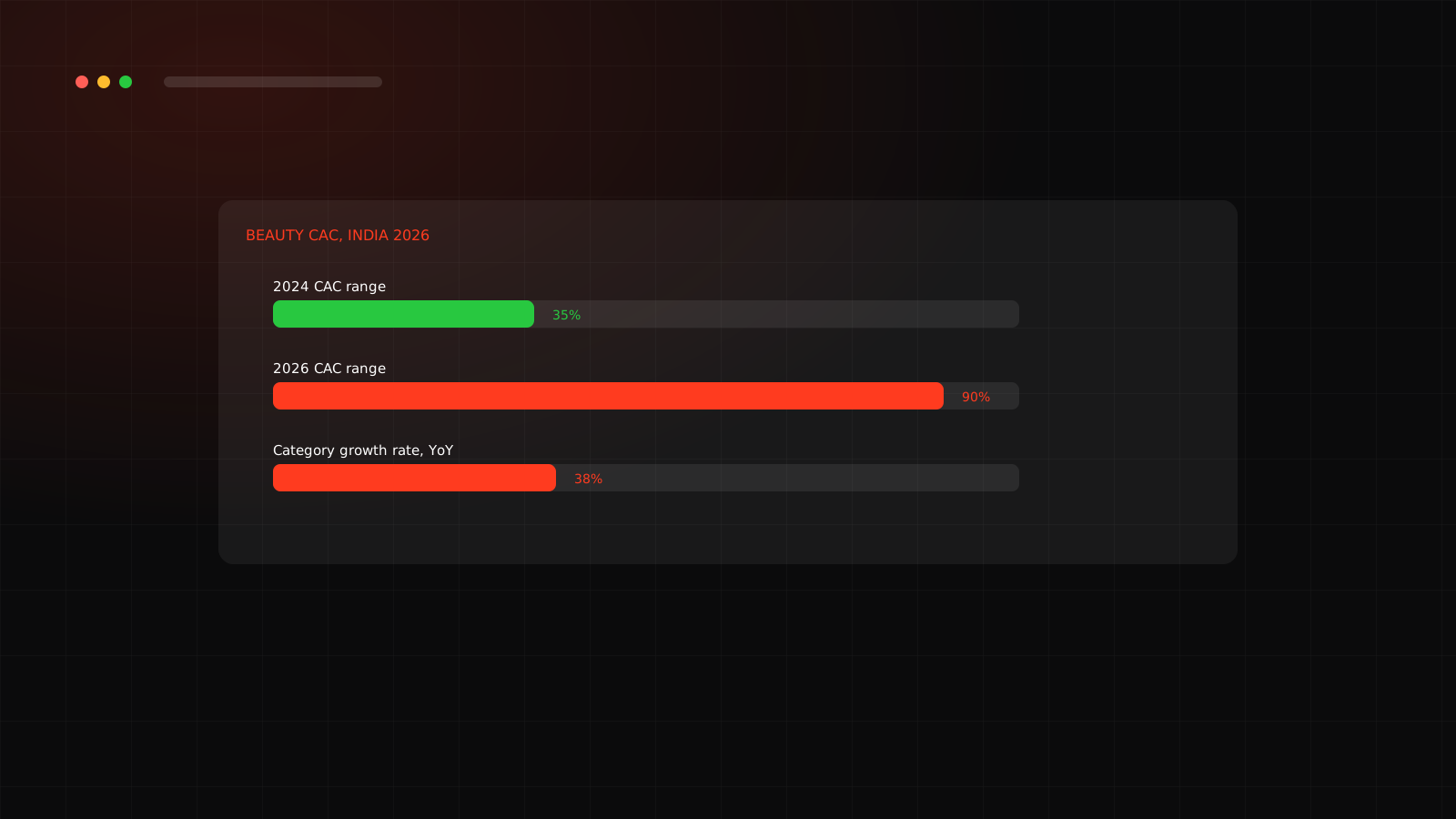
Meta CAC for beauty brands in India has climbed to roughly ₹800-1,200 per customer. Every organic visitor captured through search is one that did not cost that. The category with the fastest-rising paid acquisition cost is also the one with the most to gain from getting SEO right.
Why ingredient content outperforms product-only pages
Most beauty shoppers research before they decide on a brand. They search for an ingredient, a concern, or a routine question long before they search a specific product name. A brand whose content only exists at the product-page level is invisible for the entire research phase of the purchase, ceding that traffic to whichever competitor or publisher answered the question first.
The query types worth targeting
| Query type | Example |
|---|---|
| Ingredient comparison | niacinamide vs salicylic acid |
| Concern-specific buyer's guide | best face wash for oily skin men |
| Routine building | how to layer skincare routine |
| Skin-tone or climate specific | sunscreen for indian skin tone |
Building topical authority without a huge content team
The schema that still helps a beauty listing
Product schema with accurate pricing, availability and genuine aggregate ratings still earns rich results in Google Search, and for beauty specifically, a visible star rating directly in the search result carries real weight given how trust-sensitive the category is. FAQPage schema no longer earns a Google rich result following the May 2026 deprecation, but genuinely useful Q&A content built around ingredient and routine questions still helps rankings and AI-search citation on its own merits.
Want an organic content plan that actually offsets rising Meta CAC?
We build ingredient and routine content mapped to real search demand, not guesses.
The underlying technical foundation this content needs is covered in the internal linking topic cluster playbook.
Frequently asked questions
Ingredient comparison and routine-building content tends to outperform product-only pages, since it matches how people actually research a purchase before knowing which brand they want.
Increasingly yes. As Meta CAC climbs toward ₹800-1,200 per beauty customer, organic traffic captured at near-zero marginal cost becomes proportionally more valuable to the overall acquisition mix.
It sits in a gray zone; not full medical YMYL like supplements, but skin and health-adjacent claims still get scrutinized. Ingredient education framed factually, rather than claiming to treat a condition, stays on the safer side of that line.