Internal Linking for Ecommerce: The Topic Cluster Playbook
Homepage to collection to product to blog, and the links that turn that path into a ranking system.
Internal links do two jobs at once, and most sites only optimize for one of them. They help a visitor find the next relevant thing, and they tell search engines how pages on the site relate to each other. Get the structure right and both jobs improve together.
The basic flow for ecommerce
Most ecommerce sites work best with a simple, predictable flow: homepage to collection to product, with blog content cross-linking back into that structure rather than sitting off to the side. When search engines crawl a site, they follow internal links to build a map of topic clusters, content depth and hierarchy, essentially learning what the site considers important by what it links to most and from where.
Pillar pages and cluster pages
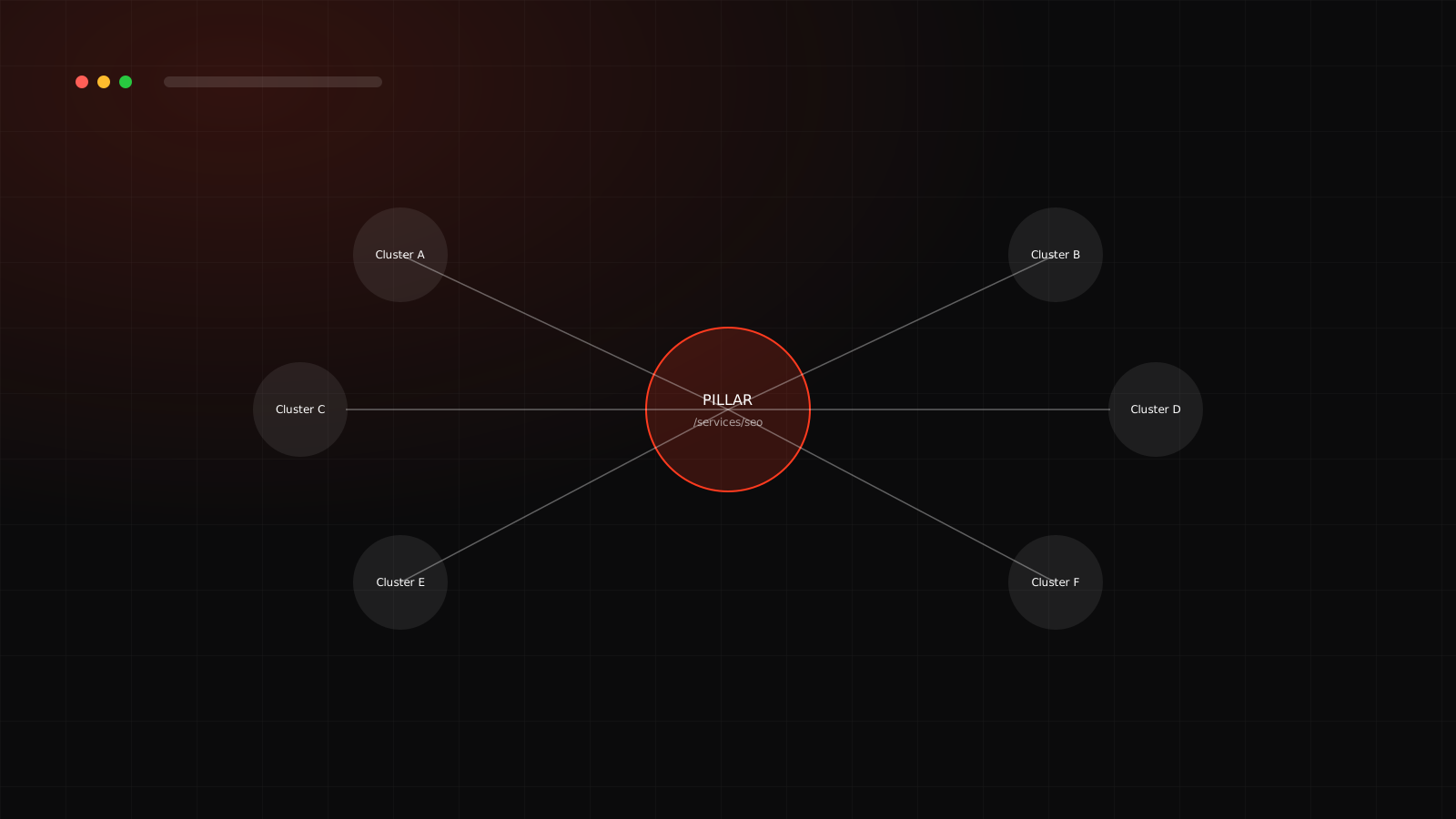
Borrowed from content SEO but directly applicable to ecommerce: a pillar page is the broad, comprehensive page targeting a high-volume head term, and cluster pages are the narrower pages targeting specific long-tail variations. In ecommerce, category and collection pages usually function as the hub or pillar, with individual product pages and supporting blog content acting as the cluster layer underneath.
| Layer | Ecommerce example |
|---|---|
| Pillar / hub | /collections/running-shoes |
| Cluster (product) | /products/trail-runner-x |
| Cluster (content) | /blog/how-to-choose-trail-running-shoes |
The bidirectional linking rule
The rule that actually reinforces the structure is bidirectional: every cluster page links back up to its pillar, and the pillar links down to every cluster page it covers. A blog post that mentions a product without linking to it, or a category page that does not surface its own best content, breaks the loop and weakens the signal. The same logic extends to cross-selling: linking products that share a use case, a variation, or a complementary function, placed where they read as a helpful suggestion rather than an interruption.
The measured impact
This is not purely a crawling exercise. Ecommerce sites with well-structured internal linking report meaningfully better on-site behavior: lower bounce rates, longer session durations, and more pages viewed per visit, which compounds into better rankings on its own since search engines read engagement patterns as a signal of relevance too.
Not sure if your catalog has orphaned pages?
We map the full internal link graph before recommending any changes.
Internal links only work if the pages they point to are the canonical ones. See the real audit we ran on our own site in this case study for what happens when they are not.
Frequently asked questions
A pillar page covering a broad, high-volume topic, surrounded by narrower cluster pages targeting specific long-tail subtopics, all interlinked. Every cluster page links up to the pillar, and the pillar links down to every cluster page, which signals to search engines how the pages relate.
Category and collection pages usually function as the hub pages in an ecommerce site, sitting between the homepage and individual product pages, similar to how a pillar page sits above its cluster articles in a content-focused topic cluster.
Yes. Sites with strong internal linking patterns report meaningfully lower bounce rates and more pages viewed per visit, because the links are also doing the job of surfacing relevant products and content a visitor did not think to search for directly.