Schema Markup for Ecommerce: What Still Earns Rich Results in 2026
Product, Review and Breadcrumb schema still work. FAQ rich results just got switched off. Here's what changed.
Structured data advice ages fast, and a chunk of what gets repeated about schema markup in ecommerce circles is now describing a feature that stopped existing months ago. Here is what actually still earns a rich result in Google Search in 2026, what just got cut, and what a properly implemented Product schema looks like.
What still earns rich results
The core ecommerce schema types are intact and doing real work. Product schema (with pricing, availability and identifiers), Review and AggregateRating, Article, Video, Organization, LocalBusiness and BreadcrumbList all continue to produce rich results in Google Search. Google's own developer documentation lists a wider gallery beyond these, including Event, Course, JobPosting and Software App, but for a D2C or B2B catalog site, Product and Review are doing most of the visible work in the results page: star ratings, price, and stock status showing up before someone even clicks through.
What just got cut
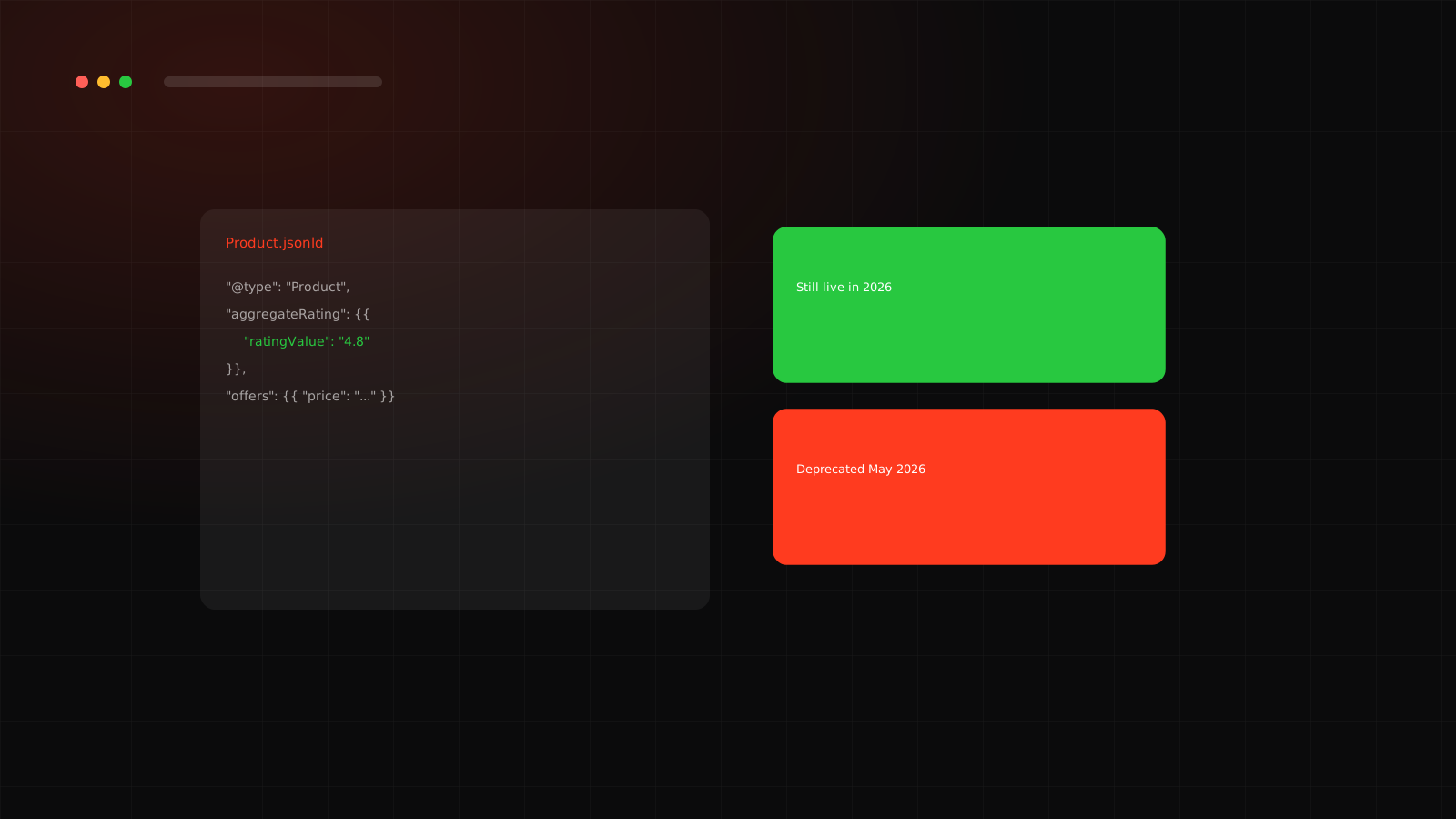
FAQ rich results were deprecated in Google Search starting May 7, 2026. The expandable question-and-answer list that used to appear directly in the search result is gone, following HowTo rich results, which Google stopped showing back in 2023. FAQPage schema itself still validates and still helps structure content for AI answer engines and other systems that read structured data outside Google's classic rich-result pipeline, but it no longer changes how a page looks in a Google search result. A meaningful share of the SEO advice still circulating about "adding FAQ schema for rich snippets" is describing a benefit that no longer exists in Google Search specifically.
Product schema, done properly
The parts of Product schema that actually earn the visible upgrade in results are the aggregate rating, the offer with a real price and currency, and availability status kept current. A Product entry with no rating, a stale price, or an availability value that never updates as stock changes is technically valid schema that earns nothing extra.
| Field | Why it matters |
|---|---|
| aggregateRating | Drives the star rating shown directly in search results |
| offers.price / priceCurrency | Shows price directly in the result, before the click |
| offers.availability | Signals in stock or out of stock; stale values erode trust fast |
| gtin / mpn / sku | Helps Google match the listing to product data it already has |
Implementation notes
Google recommends JSON-LD specifically, calling it out as the easiest format for site owners to implement and maintain at scale, over the older Microdata and RDFa formats which are still technically supported but harder to keep consistent across templates. For a catalog site, that usually means one schema template driven by the same product data feeding the page itself, so the two never drift apart.
Not sure which schema on your site still does anything?
We audit structured data against what actually earns results today, not what used to.
Schema is one visible trust signal among several. The less visible ones, the ones Google's own quality raters are trained to look for, are covered in E-E-A-T for D2C brands.
Frequently asked questions
Yes. Google deprecated FAQ rich results in Search starting May 7, 2026. FAQPage schema no longer produces the expandable question list in the results page. HowTo rich results were cut earlier, in 2023.
Not necessarily. It no longer earns a Google rich result, but it still helps structure Q&A content for AI answer engines and other search systems, and it does not hurt anything by staying. Just do not expect it to change how you appear in classic Google Search results.
Product, Review and AggregateRating, Article, Video, Organization, LocalBusiness and BreadcrumbList are all still active and producing rich results. Google recommends implementing all of these in JSON-LD, which it considers the easiest format to maintain at scale.