E-E-A-T for D2C Brands: Trust Signals That Actually Hold Up
Not a ranking factor itself, the rubric behind one. Here's what to actually build, not just claim.
E-E-A-T gets thrown around as if it were a checkbox Google reads directly off a page. It is not. It is the quality framework behind the humans who train and calibrate Google's ranking systems, and understanding that distinction changes what is actually worth building.
What E-E-A-T actually is
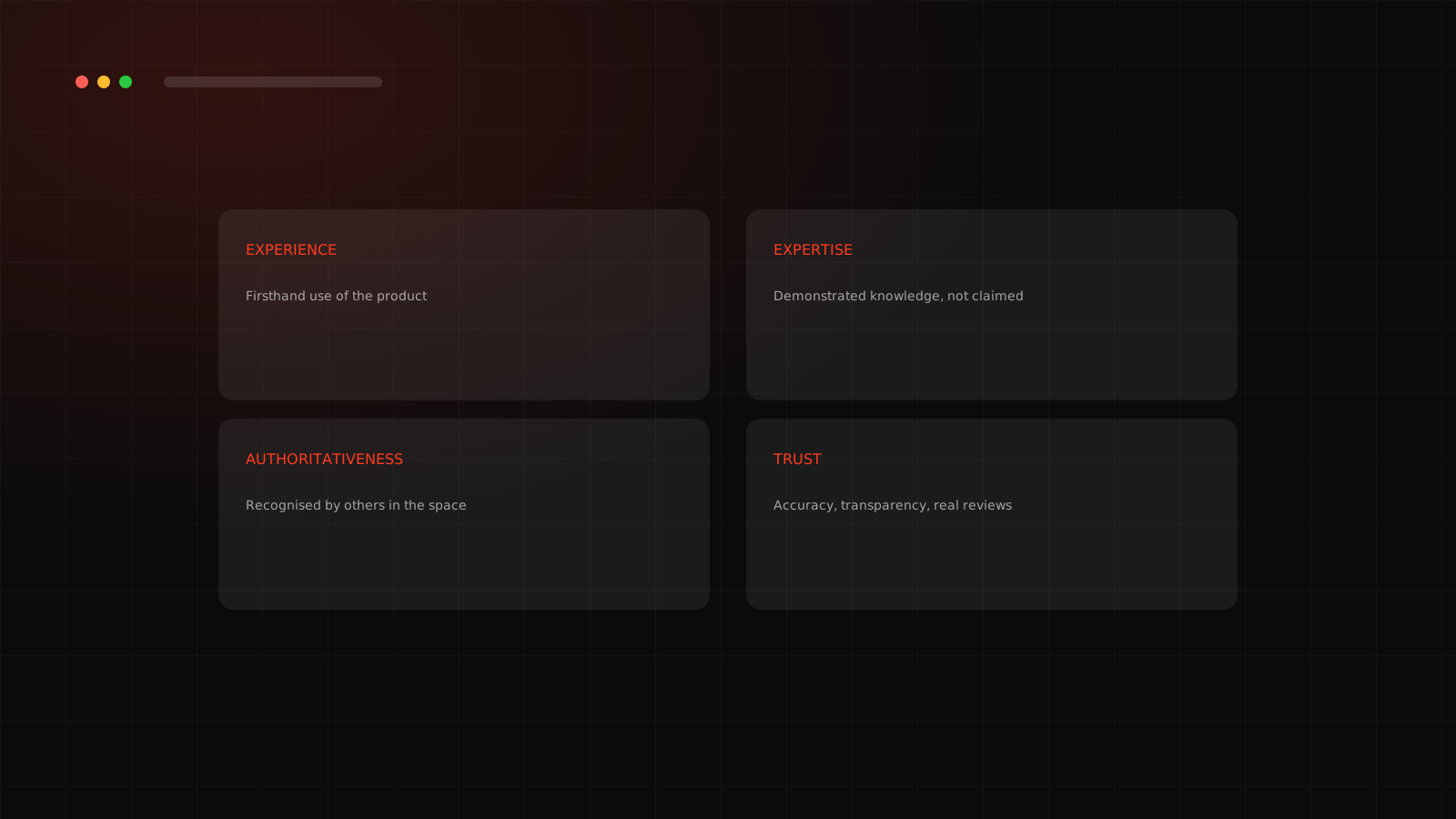
Experience, Expertise, Authoritativeness and Trustworthiness. Google added the first Experience in December 2022, expanding the older E-A-T framework specifically to reward firsthand, lived use of a product or service, not just documented expertise about the category. E-E-A-T itself is not a ranking factor Google's algorithm reads directly. It is the rubric human quality raters use to evaluate search result quality, and that rating work feeds into how the ranking systems get trained and adjusted over time. The signals that actually get used in ranking, author credentials, backlinks from genuinely authoritative sources, accurate and verifiable information, real reviews, are downstream of the same qualities E-E-A-T describes.
The four parts, for a D2C brand specifically
Why this matters more in 2026
Google's helpful content system, once a standalone update, has now been folded fully into the core ranking algorithm, running continuously rather than arriving as a separate periodic rollout. What that system is increasingly good at identifying is content that lacks genuine human expertise, which is exactly the failure mode of mass-produced AI content that summarizes what already exists without adding a firsthand perspective. Sites that show clear topical specialization and consistent depth in one area tend to outperform sites that spread thin across many unrelated topics chasing volume.
Building it, not claiming it
The mistake we see most often is treating E-E-A-T as copy to add: an "our story" paragraph, a credentials badge, a generic trust-seal image. None of that is what the framework is actually rewarding. The things that hold up are specific: named authors with real bios linked to real profiles, product content written by someone who can describe a genuine limitation as easily as a benefit, reviews that are visibly unfiltered, and outside recognition that was earned rather than purchased.
Want a content audit that checks for this specifically?
We look at authorship, accuracy and depth, not just keyword coverage.
Trust signals decay the same way rankings do if nobody revisits them. See why your best blog posts are losing rankings for the maintenance side of this same problem.
Frequently asked questions
No, not directly. E-E-A-T is the quality framework Google's human search raters use to evaluate content when training and calibrating the ranking systems. It is not itself a signal fed into the algorithm, but the underlying things it measures, like author credentials, accurate content and genuine expertise, correlate with signals the algorithm does use.
Experience. Google added it in December 2022, expanding the original E-A-T framework (Expertise, Authoritativeness, Trustworthiness) to explicitly reward firsthand, lived experience with a product or topic, not just credentialed knowledge about it.
Yes, especially for Your-Money-or-Your-Life topics: health, finance, legal, safety. Google's own guidance states these require both professional expertise and genuine experience. A D2C brand selling supplements or financial products sits much closer to this bar than one selling home decor.