How Much Should You Pay a Performance Marketing Agency in India?
Retainer, percentage-of-spend, hybrid, project-based. What each model actually means, what changes the price, and what to ask before signing.
Most agency-pricing conversations start backwards: a founder gets a number, then tries to work out whether it's reasonable. This is the reverse version, what the models actually are, what genuinely moves the price, and how to compare two proposals that don't look anything alike.
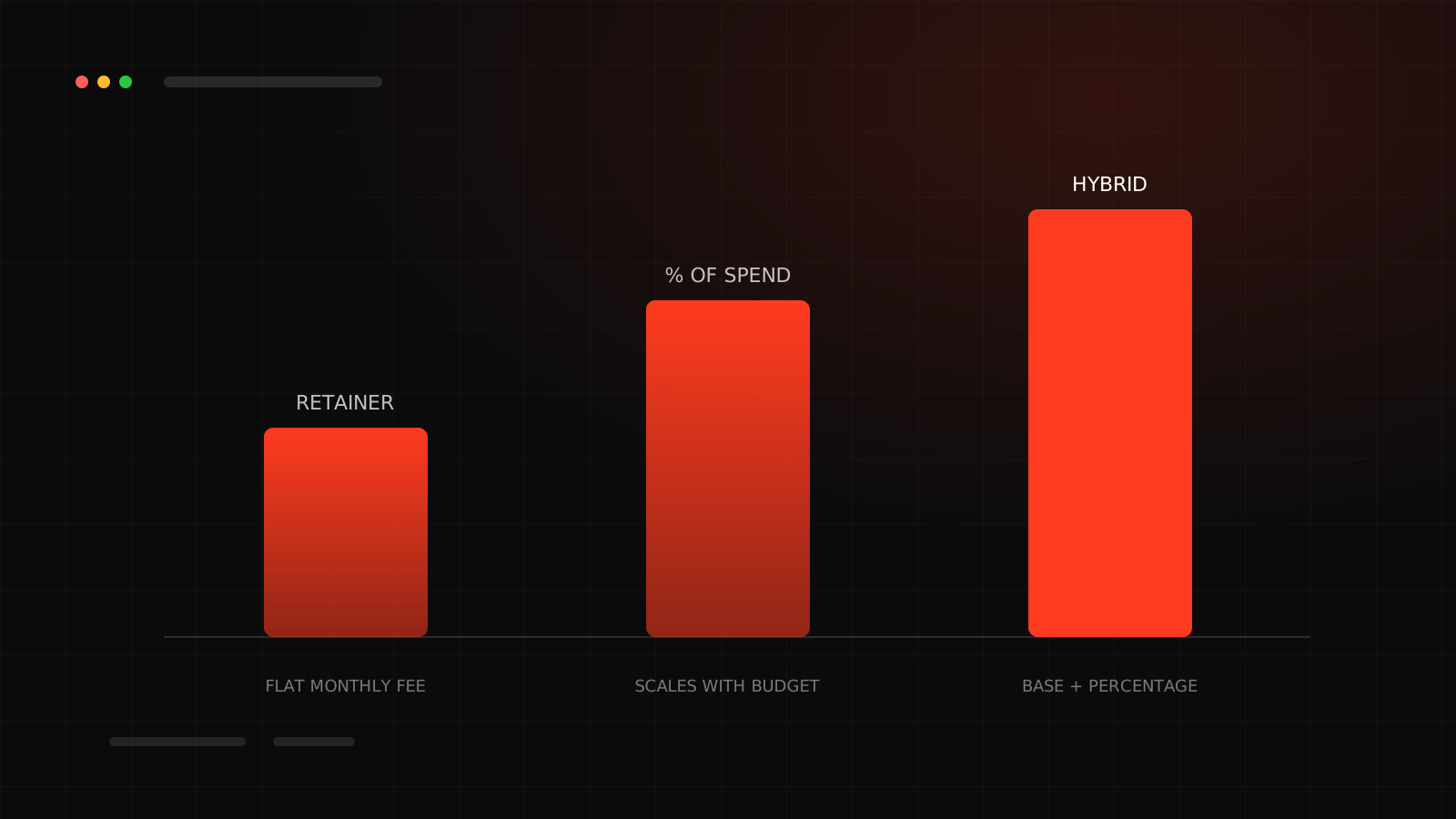
The four pricing models
Almost every proposal you'll see is a variation on one of these:
What actually changes the price
Two accounts at the same ad spend can have very different fair prices. The real variables are spend level (more budget generally means a lower percentage, not a higher one, since the work doesn't scale linearly), scope complexity (a single-channel account is a different job than one spanning Meta, Google, SEO and creative production), catalogue or feed size (a 4,000-SKU catalogue takes meaningfully more setup and maintenance than a 20-SKU one), and how much of the tracking and creative pipeline the agency owns versus just the media buying.
What the market actually charges
Ranges gathered from public agency pricing pages and industry reporting across the channels most D2C and B2B brands buy:
| Service | Typical monthly range | Common model |
|---|---|---|
| Meta Ads management | ₹25,000 – ₹4,00,000+ | Flat retainer or 10–20% of spend |
| Google Ads management | ₹20,000 – ₹3,00,000+ | Flat retainer or 10–20% of spend |
| SEO (D2C/ecommerce) | ₹80,000 – ₹25,00,000 | Flat retainer, scoped to catalogue size |
| UGC video production | ₹3,000 – ₹25,000 per asset | Per-asset or blended monthly volume rate |
The wide top end on SEO reflects the gap between a small catalogue chasing a handful of terms and an enterprise brand competing against marketplaces across thousands of SKUs, those are genuinely different jobs, not the same service priced differently.
What should actually be included
The number on a proposal means little without knowing what it buys. At minimum, expect strategy and execution (not just campaign babysitting), a real creative testing cadence rather than a static creative set, tracking and attribution setup as part of the engagement rather than a paid add-on, and reporting that explains decisions, not just a dashboard export.
Questions to ask before signing
How to compare two proposals that look nothing alike
Convert every proposal to the same unit before comparing: total monthly cost divided by monthly ad spend, expressed as a percentage. A ₹60,000 flat fee on a ₹3,00,000 spend is effectively a 20% arrangement. A "12% of spend" proposal on the same budget is ₹36,000. Once both are in the same unit, the real comparison is what each actually includes for that price, not which number looks smaller on the page.
What "cheap" can actually mean
A below-market fee usually means one of a few things: a junior team learning on your budget, a media-only scope with creative and tracking billed separately later, or a retainer set low to win the account with the real cost recovered elsewhere. None of those are automatically dishonest, but they're worth knowing going in. On the other end, a higher fee can make real economic sense when it buys founder-level attention, an in-house creative pipeline instead of a rotating freelancer queue, or tracking work that pays for itself the first time it prevents a wrong scaling decision.
Want a proposal scoped to your actual account?
We price after the audit, not before. You'll get a number, not a bracket.
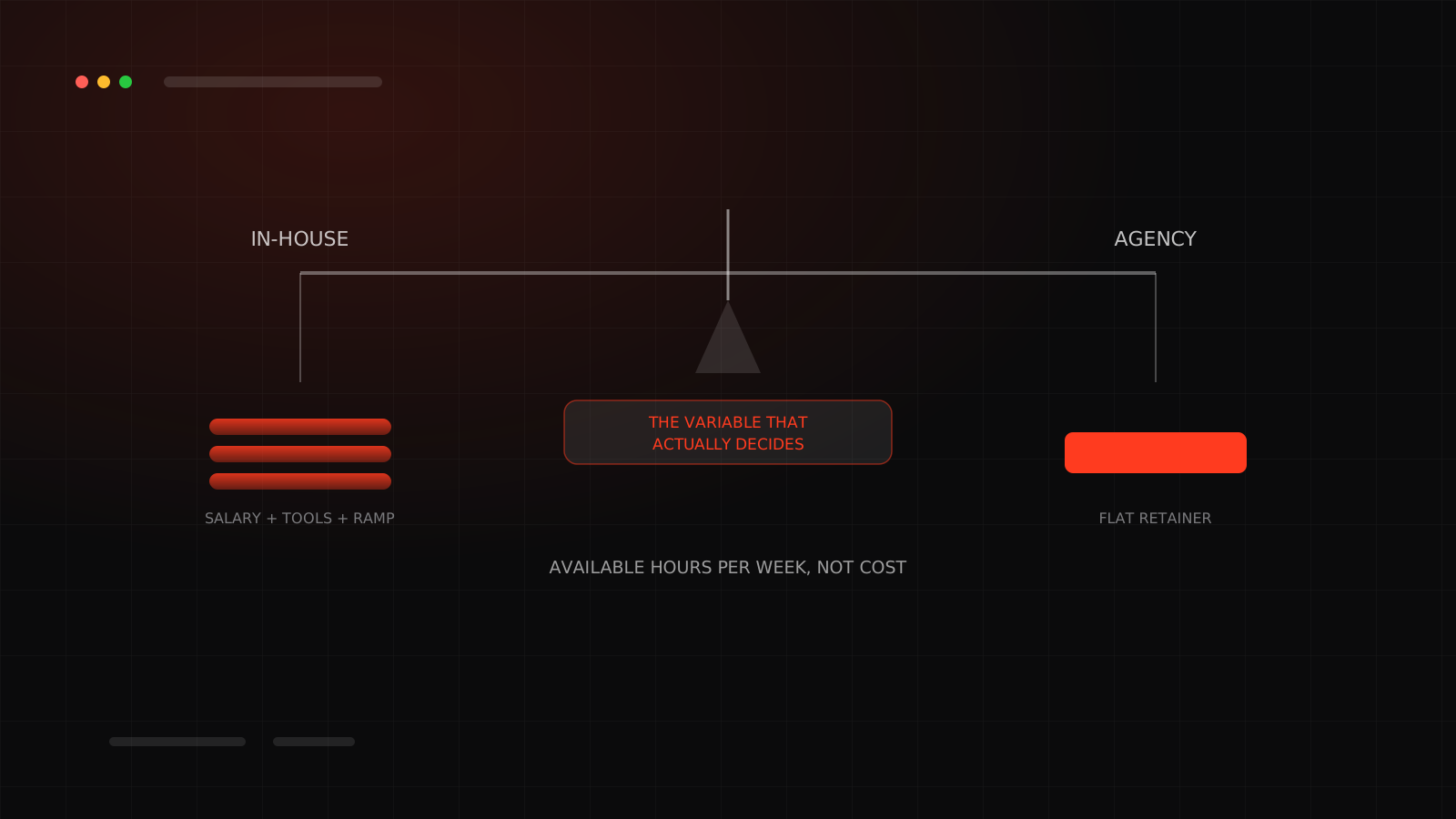
If you're evaluating whether to switch from an existing agency rather than hiring your first one, the pricing conversation usually comes second. Start with whether the current engagement is actually working before deciding what a fair price for the next one looks like. And if none of these numbers feel worth paying, run the actual comparison against hiring in-house instead, since the two options don't cost what most people assume.