In-House vs Agency for Meta Ads: An Honest Breakdown
Neither is automatically right. Here's the actual math, and the one variable most comparisons skip past.
Most "in-house vs agency" comparisons are written by one side trying to sell the other. This one tries not to be that. Both are legitimate ways to run Meta Ads. The question isn't which is better, it's which one actually fits the size and shape of the account you have right now.
What in-house actually costs
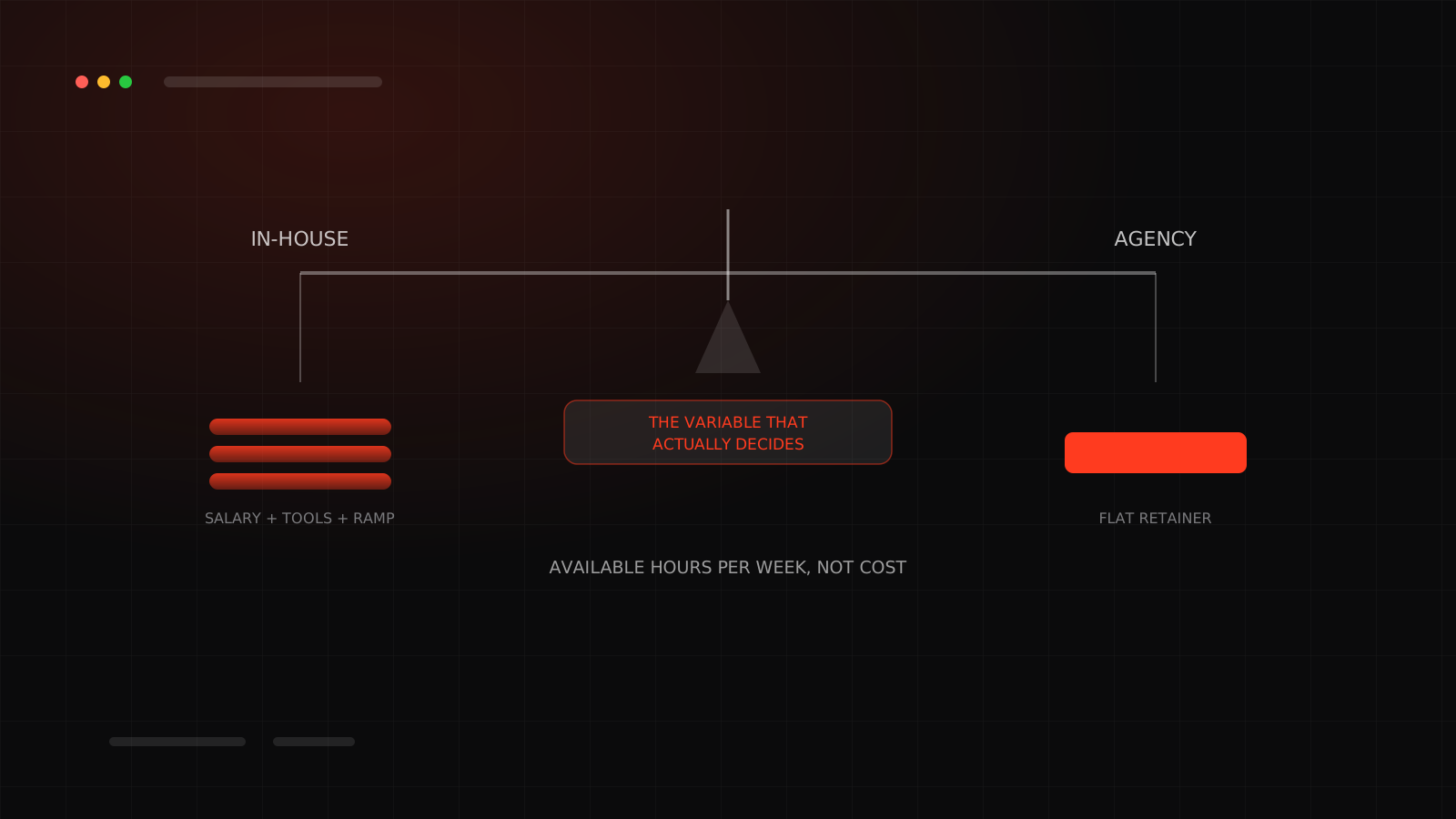
Not just the salary. A performance marketer capable of running Meta Ads well in India typically costs somewhere in the ₹12–25 LPA range, more at the senior end managing larger budgets, based on current market salary data. Add recruiting time, onboarding, the tools they'll want (creative, analytics, project management), and the ramp period where they're learning your specific product and audience before they're actually productive. A realistic first-year all-in cost is meaningfully higher than the headline salary number, and none of that spend touches the ad account itself.
What an agency actually costs
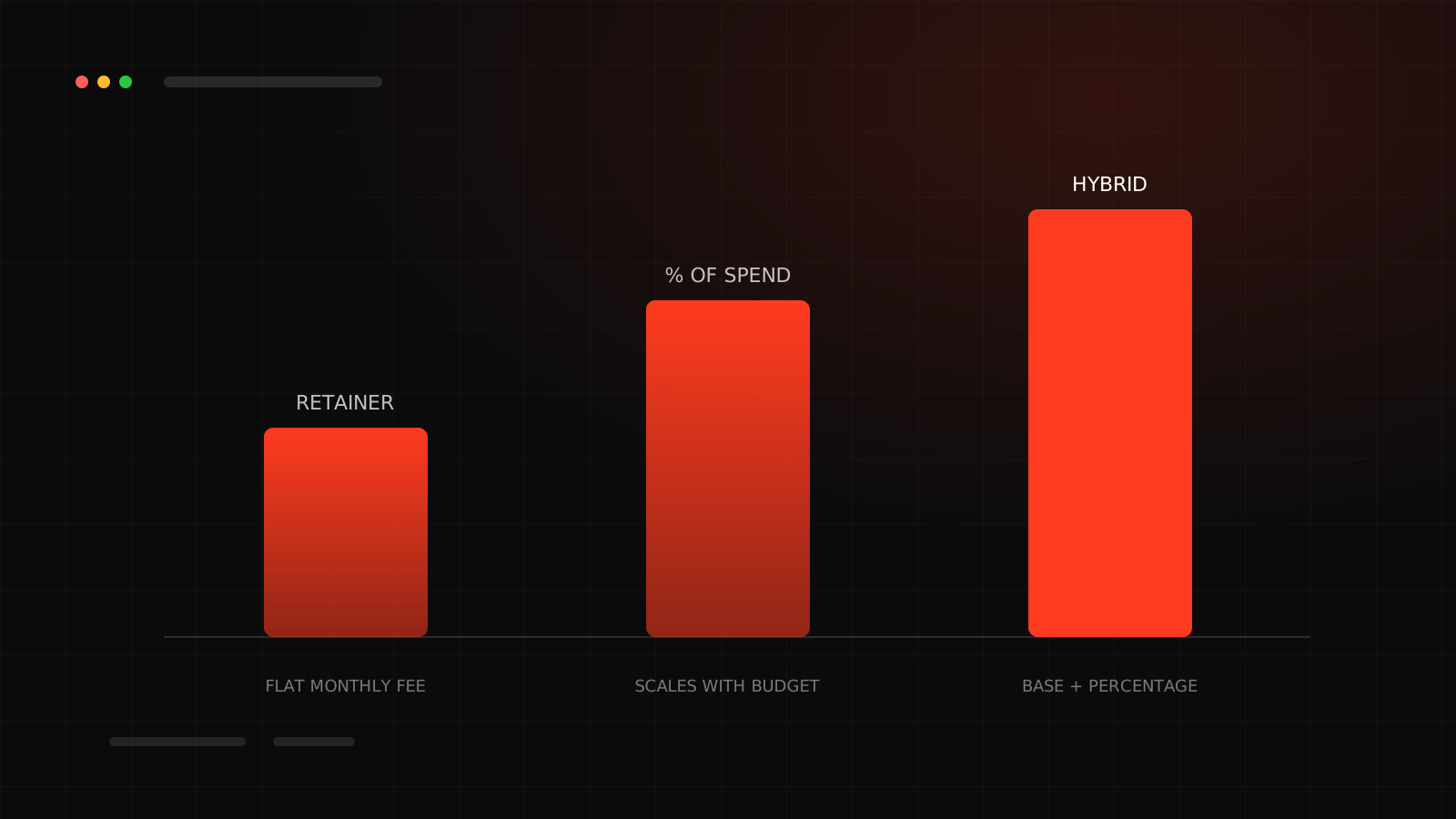
We've covered this in detail elsewhere: flat retainers typically run ₹25,000 to ₹4,00,000+ a month, or 10–20% of spend, scaled to account complexity. The short version: for most accounts under roughly ₹15–20L a month in spend, an agency retainer costs less than a single dedicated in-house hire, before you've added a second person for the inevitable coverage gaps.
What in-house genuinely gets right
Someone who lives inside the business full-time develops product knowledge an outside team can't match as fast, and they're available for the small, constant decisions that don't justify a call but add up over a quarter. There's also no vendor relationship to manage, no monthly report to interpret secondhand.
What an agency genuinely gets right
Pattern recognition across many accounts is the real advantage, not headcount. An agency has already seen the specific failure mode your account is about to hit, because it's seen it on five other accounts in the same category. There's also no single point of failure: a founder who hires one in-house media buyer is one resignation away from running blind for six to eight weeks while they hire again.
The variable most comparisons skip: bandwidth, not cost
Cost is the easy number to compare and often the wrong one to decide on. The real question is whether anyone inside the business has 15–20 focused hours a week and the specific skill to run this well, not just the time to attempt it. A founder doing Meta Ads themselves between everything else isn't cheaper than an agency, they're just paying with hours that have a real opportunity cost, usually a higher one than the retainer would have been.
The model most growing D2C brands actually run
In practice, the cleanest split we see isn't in-house or agency, it's a founder or marketing lead who owns strategy and product truth, paired with an agency that owns execution, testing infrastructure and the pattern recognition from other accounts. That's a real, common structure, not a pitch for a specific vendor relationship, and it's why what the agency actually does day to day matters more than the org-chart label.
How to actually decide
Answer honestly and the decision usually makes itself. Most of the disagreement in this debate comes from people generalizing from one good or bad experience, not from the underlying economics actually being close.
Not sure which side of the line you're on?
We'll tell you honestly on the audit call, including if the answer is "hire in-house first."
If the agency side of this comparison is the one you're actually weighing, the practical next question is what that should cost. We cover that in how much to pay a performance marketing agency in India.