Meta Ads Creative Fatigue: How to Spot It Early and What to Test Next
Frequency climbing, CTR sliding, CPA creeping up while nothing else changed. Here is how to catch it before the account notices the hard way.
Creative fatigue doesn't announce itself. There's no alert, no red banner, nothing that says "this ad is dying." Instead you get three small, boring shifts in the numbers over about a week, and by the time they're obvious enough to notice on a Monday scroll through the dashboard, you've usually already been paying the tax on it for several days.
The good news is the pattern is predictable enough to catch early, and the fix is rarely "make a completely new ad." It's usually smaller and more mechanical than that, if you know what you're actually looking at.
What creative fatigue actually looks like
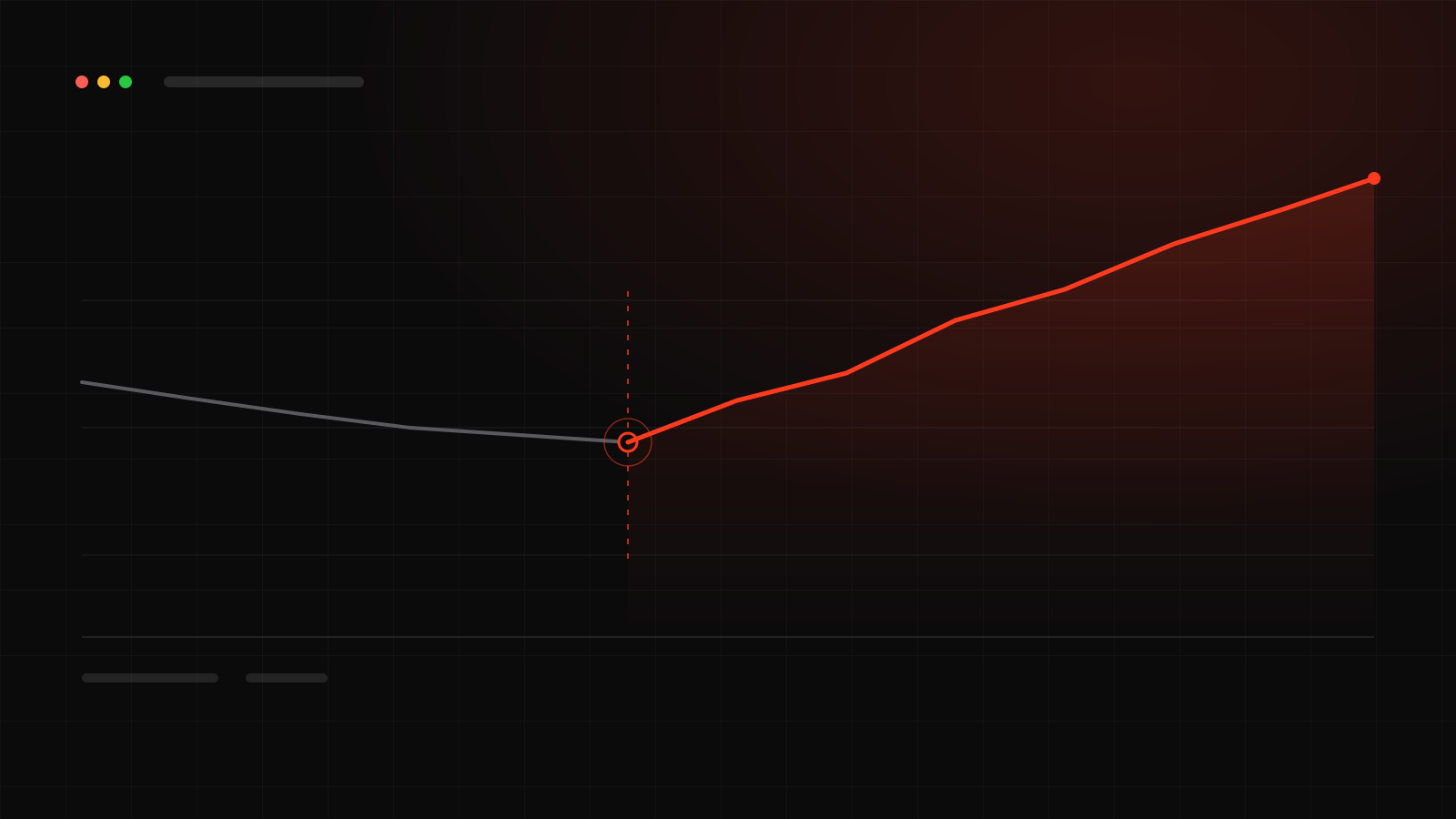
Three metrics move together, and the order matters: CTR falls first, quietly, before anyone's watching closely. Frequency climbs as the same audience sees the ad more times without converting. Then cost per result rises, which is the point where it finally shows up somewhere someone checks daily.
An ad with declining CTR and frequency above 3 is fatiguing in almost every account we've looked at. Meta will sometimes flag it directly: add the Delivery column to your Ads Manager view and look for creative labelled "Creative Limited" or "Creative Fatigue." If you see that label, the platform has already reached the same conclusion your numbers are pointing to.
The rough timeline
| Days live | What you'll typically see |
|---|---|
| Day 1–5 | Strong CTR, healthy CPA, this is the honeymoon window |
| Day 5–10 | CTR starts declining gradually, still easy to miss if you're not checking weekly |
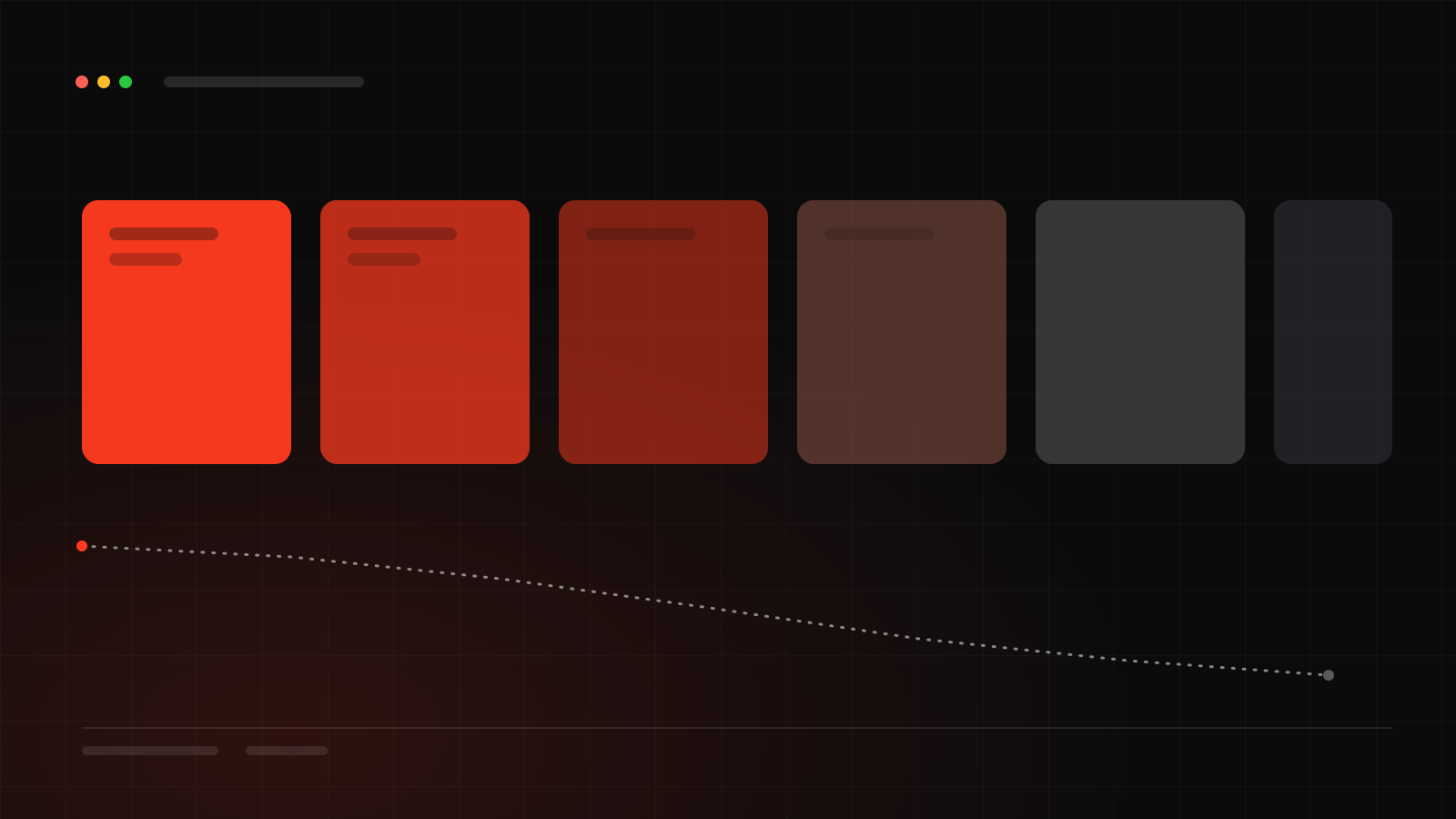
| Day 10–20 | CTR drop becomes noticeable, frequency climbs, CPA creeps up |
Spend and audience size compress this timeline. At higher daily budgets fatigue can set in within 7–10 days instead of 20. Retargeting pools are the fastest to fatigue of all. The audience is small and sees the ad repeatedly, so 3–5 days of heavy frequency is enough to tire a retargeting creative that would last weeks in a broad prospecting campaign.
How to actually fix it without resetting learning
The instinct is to pause the tired ad and launch something completely new. That's the slowest way to recover, because it throws away the learning phase progress the ad set already built and starts the algorithm from zero again.
A staged approach works better in almost every account: replace one or two fatigued assets at a time inside the same ad set, let the new creative ride alongside what's still performing, and let delivery shift naturally toward whichever wins. This keeps the ad set's accumulated signal intact instead of forcing a cold restart.
- Change the hook before you change the whole ad. Often the first 1–2 seconds is what's fatigued, not the entire concept. A new opening on the same underlying creative can reset attention without a full reshoot.
- Rotate format, not just footage. The same message as a Reel instead of a static image, or vice versa, reaches the same audience through a different pattern-interrupt.
- Cap frequency deliberately on retargeting pools specifically, since that's where fatigue compounds fastest.
A testing cadence that prevents this from being a surprise
The real fix for creative fatigue isn't a faster reaction. It's not needing to react in a panic in the first place, because there's always fresh creative already in the pipeline. On the accounts we run, that means a standing weekly testing rhythm rather than a "we'll make more ads when these stop working" approach.
What this looks like when it's working
On the skincare brand account, we tested 214 creative variations over six months to find 31 repeatable winners, and even the best-performing angle, a creator reading her actual dermatologist bill next to the product, was expected to fatigue and ran for 11 weeks before it needed replacing. That expectation is the point: a winning creative isn't a permanent asset, it's a temporarily undefeated one, and the pipeline has to assume it will eventually need a successor.
A pet care brand we work with runs this even more aggressively given how fast UGC-style content fatigues in a feed, 25 to 35 new assets enter testing every month against a 160-asset library, and creator-shot footage consistently beats polished brand edits because it reads as advice, not an ad. That's a creative supply chain problem as much as a media-buying one; no amount of clever bidding fixes an account that's run out of fresh angles, and it starts with who you cast, covered in what actually makes a creator look like your customer.
Need a creative pipeline that doesn't run dry?
We script, cast and edit UGC on buying psychology, then monitor fatigue and iterate before performance drops, not after.
If creative isn't the actual problem in your account, it's worth ruling out the more upstream causes first. We cover the full diagnostic order in why your Meta Ads aren't converting before you spend another week on new hooks.