How Brands Get Cited in AI Search: What the Research Actually Shows
A 2026 academic survey reviewed 45 studies on AI citation. Here's what it found, and what it explicitly could not confirm.
Most content on "getting cited by AI" is written by people selling a service, with predictable incentives to overstate what's provable. A 2026 academic survey took a more rigorous look, reviewing 45 studies published between November 2023 and July 2026 on generative engine optimization. Its findings are more useful, and more honest, than the typical hack list.
How the research frames AI citation
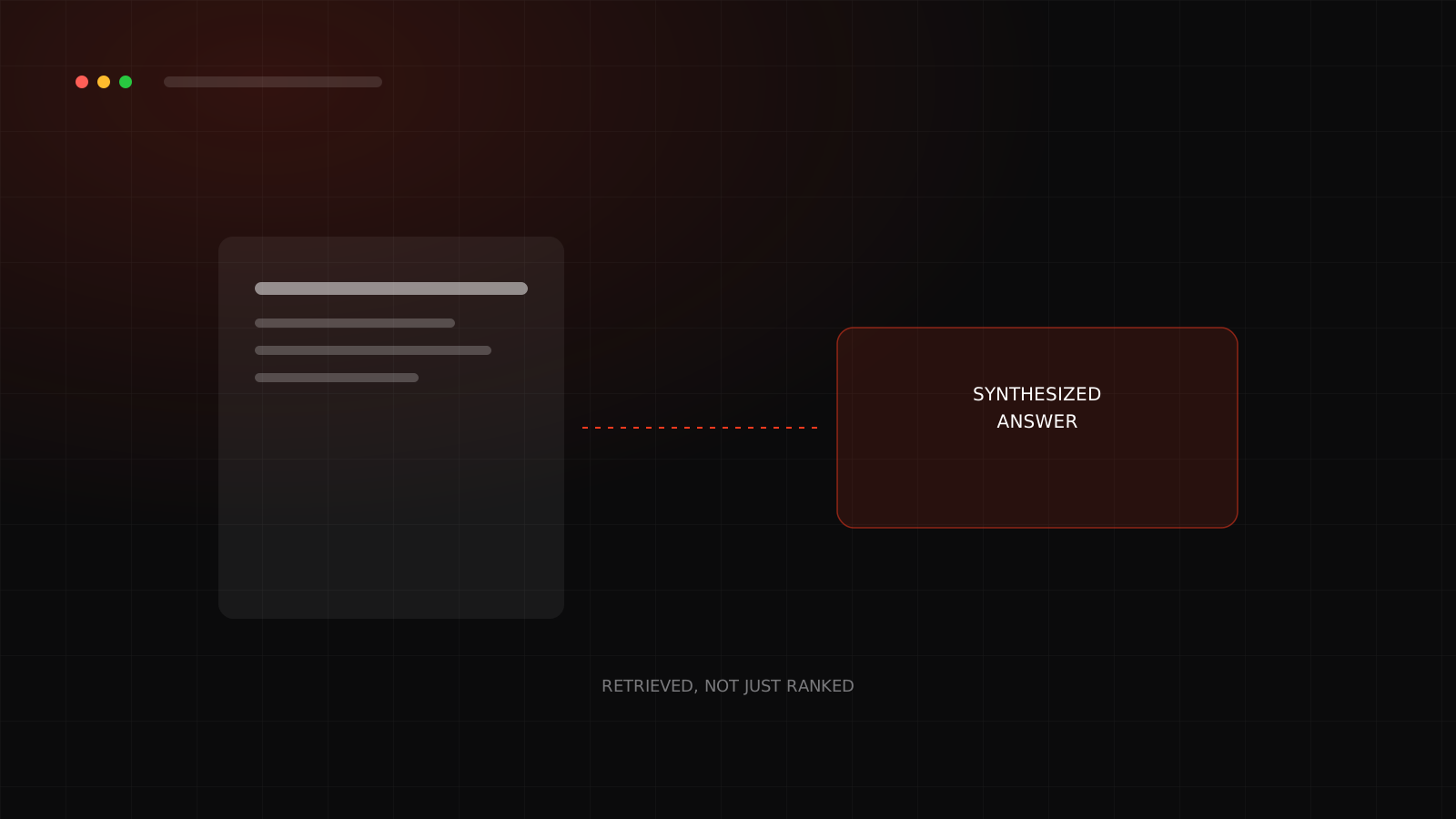
The survey treats getting cited as a multi-stage pipeline: search activation, crawling, indexing, retrieval, reranking, citation, and finally absorption into the model's written output. A brand can fail at any stage, and success at one stage doesn't guarantee the next; a page that gets retrieved isn't automatically the one that gets quoted.
What actually reproduces across studies
Two factors: topical relevance and context position, meaning how directly content answers the specific question and where the relevant information sits within the page. These held up as genuine, reproducible levers across the reviewed research.
What doesn't hold up
Generic optimization heuristics, the kind sold as universal "GEO hacks," showed poor transferability from one AI platform to another. The survey also found that competitive dynamics erode individual gains over time, meaning a tactic that works while few brands use it tends to stop working once everyone copies it. Most strikingly: citation-focused rewrites can actually harm retrieval performance instead of improving it, when the rewrite optimizes for citation format at the expense of the clarity that got the page retrieved in the first place.
What commercial audits found
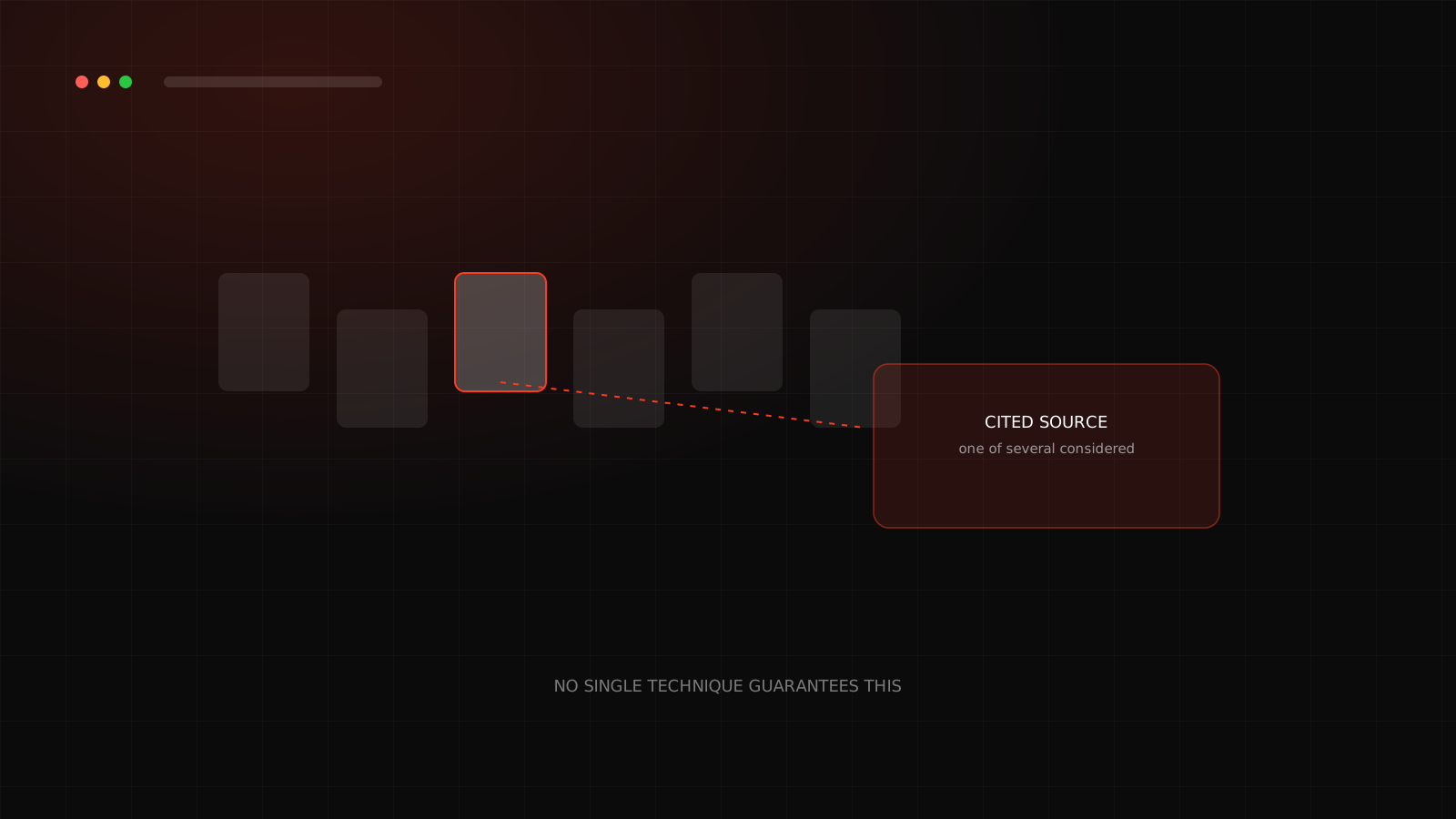
Separately from the academic review, real-world monitoring tends to show low overlap between which sources get cited across different runs of the same question, and meaningful run-to-run variability even for the same query on the same platform. Citation isn't a fixed, stable ranking the way a Google position is; it's closer to a probabilistic outcome that shifts.
What this means for a brand's actual strategy
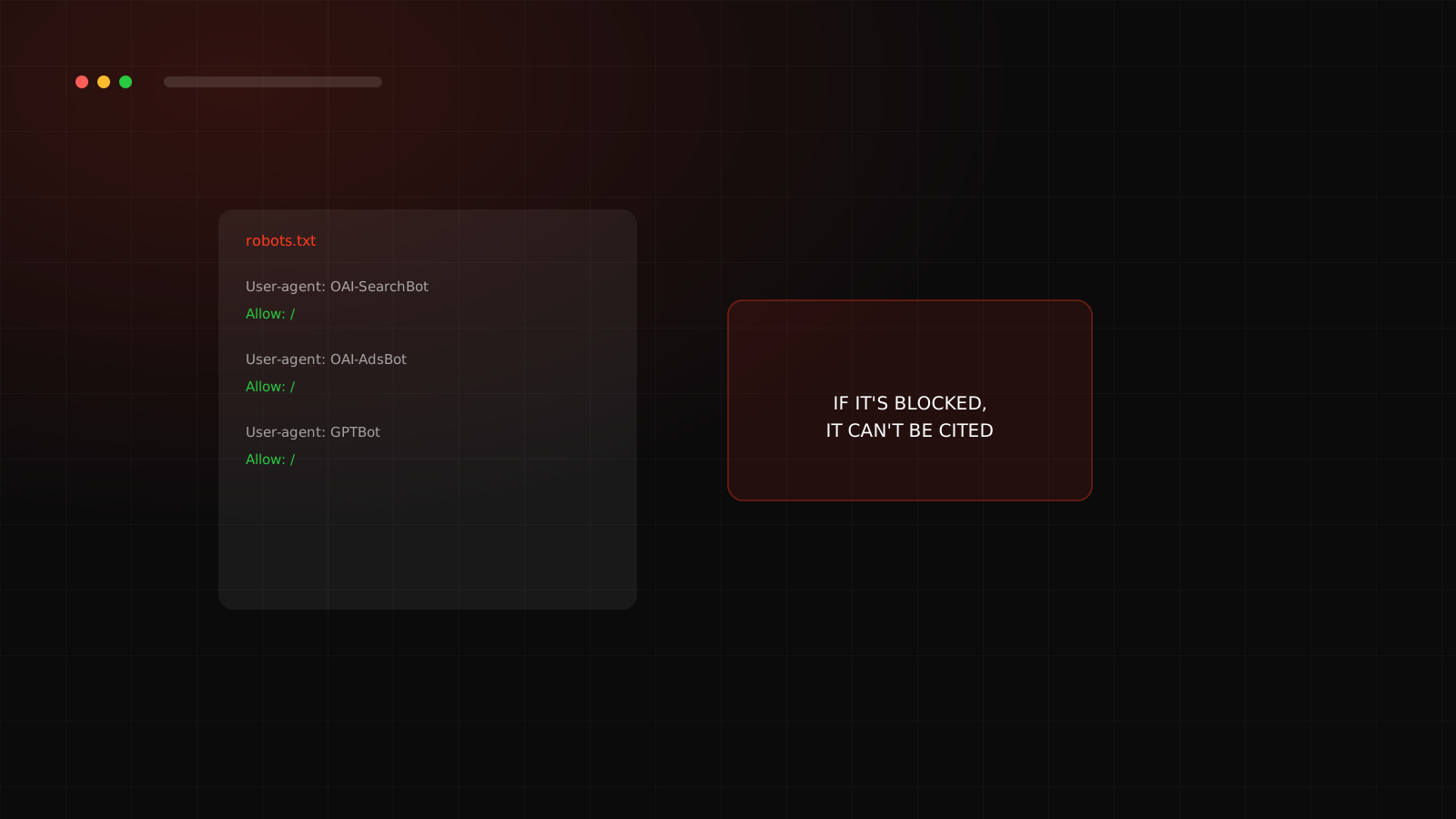
Stop chasing citation as the metric and start building the conditions that make citation more likely: genuine topical authority, content that answers a specific question directly and early, and technical access that ensures the page can be retrieved at all. These are the fundamentals the research actually supports, not a guarantee, a better bet.
Want the fundamentals done properly, not a hack list?
We build the entity clarity and structure the research actually supports.
For what this means in practice compared to your existing SEO work, see LLM SEO vs traditional SEO. For the crawler-access foundation this all depends on, read preparing your website for AI crawlers.