Content Decay: Why Your Best Blog Posts Are Losing Rankings
Refresh, consolidate or prune. The framework for content that used to rank and quietly stopped.
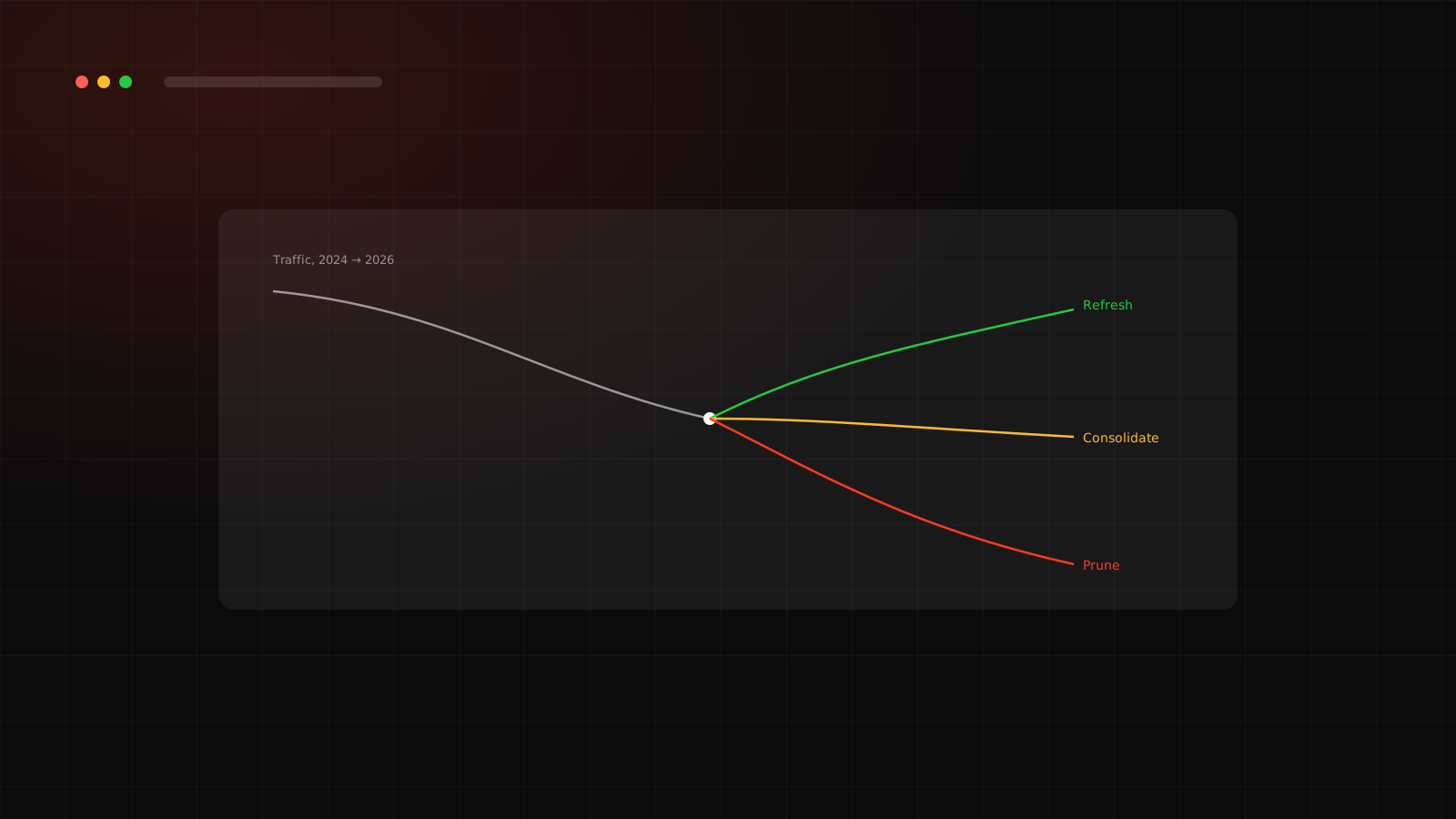
A post that ranked well in 2023 can lose half its traffic by 2026 without anything dramatic happening to it. Nobody deleted it, nobody deindexed it. The information just went quietly stale while competitors kept publishing, and the search landscape kept shifting underneath it. That slow bleed has a name: content decay, and it is far more common than most content calendars account for.
What decay actually looks like
It rarely shows up as a cliff. It shows up as a gentle, months-long decline that is easy to miss unless someone is actually looking at older content on a schedule, which most teams are not. Survey data backs this up starkly: only about a third of marketers audit their content twice a year, and a meaningful share, around one in six, say they never audit it at all. That means a large amount of decaying content simply keeps decaying, unnoticed, because nobody is checking.
Refresh, consolidate, or prune
Not every decaying page deserves the same response. The framework that actually holds up:
The data behind refreshing
Refreshing is not a hunch, it is one of the better-documented levers in SEO. Orbit Media's annual blogger survey found that bloggers who update older posts are two and a half times more likely to report strong results than those who do not. One frequently cited case saw a 260% jump in organic traffic within fourteen days of a systematic content update pass. Updated content with stronger E-E-A-T signals, current author information, verified accuracy, has also been shown to earn meaningfully more featured snippets on average than stale equivalents.
A newer, second kind of decay
2026 added a wrinkle that did not exist a few years ago: a page can lose its Google ranking and disappear from AI-generated answers on entirely separate timelines. Traditional decay tracking, watching keyword rankings, does not automatically catch the second kind. A page can hold its ranking position while quietly stopping to get cited or summarized in AI search results, which is a distinct signal worth tracking on its own now, not assumed to move in lockstep with classic rankings.
Not sure which of your old posts are quietly decaying?
We run a real content audit against current rankings and AI citation, not a guess.
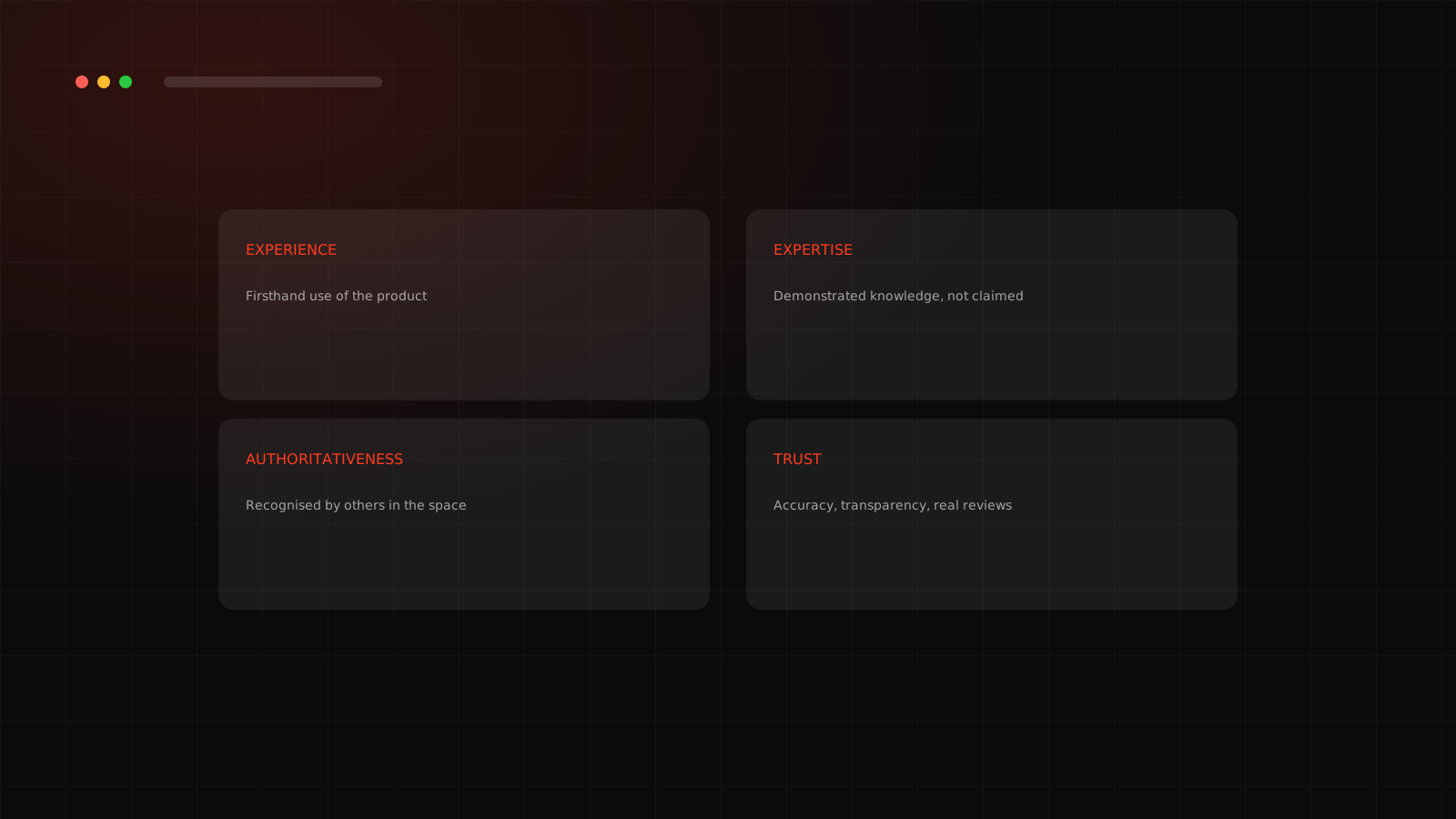
Refreshing content works best alongside the trust signals covered in E-E-A-T for D2C brands, since a technically updated page with no real authorship or accuracy improvement rarely recovers as well as one that gets both fixed together.
Frequently asked questions
The slow, steady loss of organic traffic and rankings on a page that used to perform well. It rarely happens suddenly; it creeps, usually because the information has gone stale, competitors published something better, or a core algorithm update shifted what counts as the best answer.
Refresh a page that still has backlink equity and ranks for valuable keywords but needs updated information or better structure. Prune a page with no backlinks, no rankings and no meaningful traffic that a stronger page on the site already covers better.
Yes, in the right cases. Removing pages that add no value and cover overlapping ground can improve how a site's overall quality and topical focus are read, and some sites have seen organic traffic grow significantly after a disciplined pruning pass.