What Is Performance Marketing? A Simple Guide for D2C Brands
Performance marketing means paying for measurable results such as sales and leads. Learn how it works, which channels it uses and how to start.

A simple definition
Performance marketing is marketing where results are measured and judged by actions that matter to the business: a purchase, a lead, a booking. The name comes from the idea that you pay for performance. Every campaign has a target, such as a cost per customer, and you keep or cut it based on whether it hits the target.
How it differs from brand advertising
| Brand advertising | Performance marketing | |
|---|---|---|
| Goal | Awareness and memory | Sales, leads, sign-ups |
| Measured by | Reach, impressions, recall | Cost per customer, ROAS, revenue |
| Feedback speed | Slow and indirect | Daily or weekly |
| Typical channels | TV, print, billboards | Google Ads, Meta Ads, email |
Good brands use both. But a small D2C brand with a limited budget usually gets further by starting with channels where every rupee can be tracked.
The main channels
- Search ads (Google Ads): reach people who are already searching to buy.
- Social ads (Meta Ads): create demand with people who were not searching yet.
- Marketplaces and affiliates: borrow someone else's traffic for a fee.
- Email and WhatsApp: bring past buyers back.
More than ads: the full system
Ad platforms only show people your offer. Whether they buy depends on the page, the price, the trust signals and the tracking behind them. That is why performance marketing includes landing pages, creative and conversion work, not only media buying.
The numbers that matter
How to start
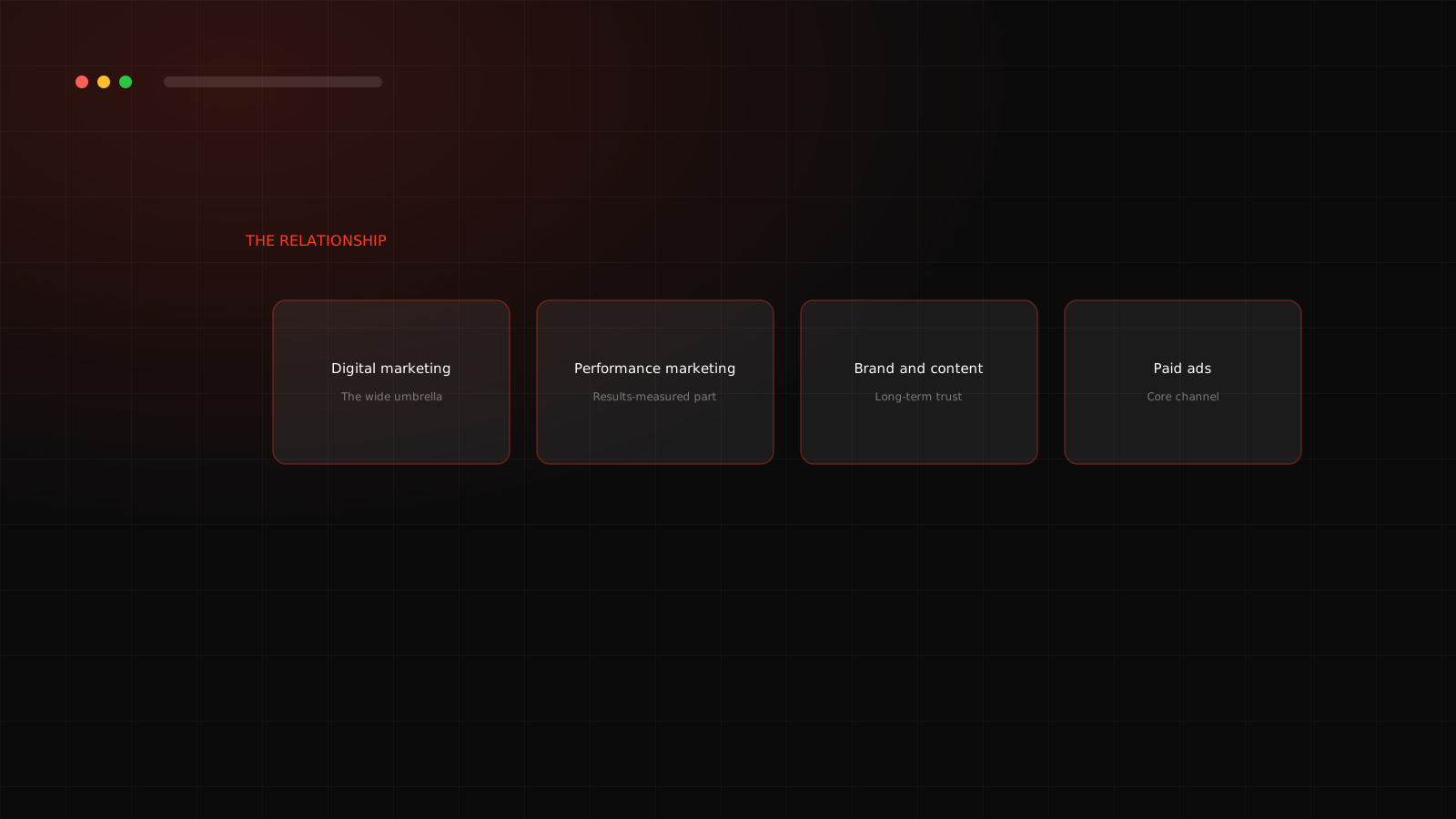
Compare with performance marketing vs digital marketing. Looking for a partner? See our performance marketing agency in Surat.
Want to see if performance marketing fits your brand?
Our free audit shows what to fix and which channel to start with.
Frequently asked questions
Advertising where you measure and judge results by actions like sales and leads, not by how many people saw the ad.
Mostly paid search such as Google Ads, paid social such as Meta Ads, plus affiliates, marketplaces and email. Website conversion and tracking are part of it too.
Paid ads are the core, but the work also includes tracking, creative, landing pages and conversion rate optimization, because those decide whether ad spend turns into sales.
It suits businesses that can measure outcomes online. If you cannot track sales or leads, you first need to set up measurement.