What Is a Good ROAS on Meta Ads in India? Break-Even and Benchmarks
A good ROAS depends on your margin. Learn how to calculate break-even ROAS, what benchmarks Indian D2C brands see and why returns change the math.
What ROAS means
ROAS stands for return on ad spend. You divide the revenue your ads brought in by the money you spent on them. If you spent ₹10,000 and the ads brought ₹40,000 in sales, your ROAS is 4.
Start with your break-even ROAS
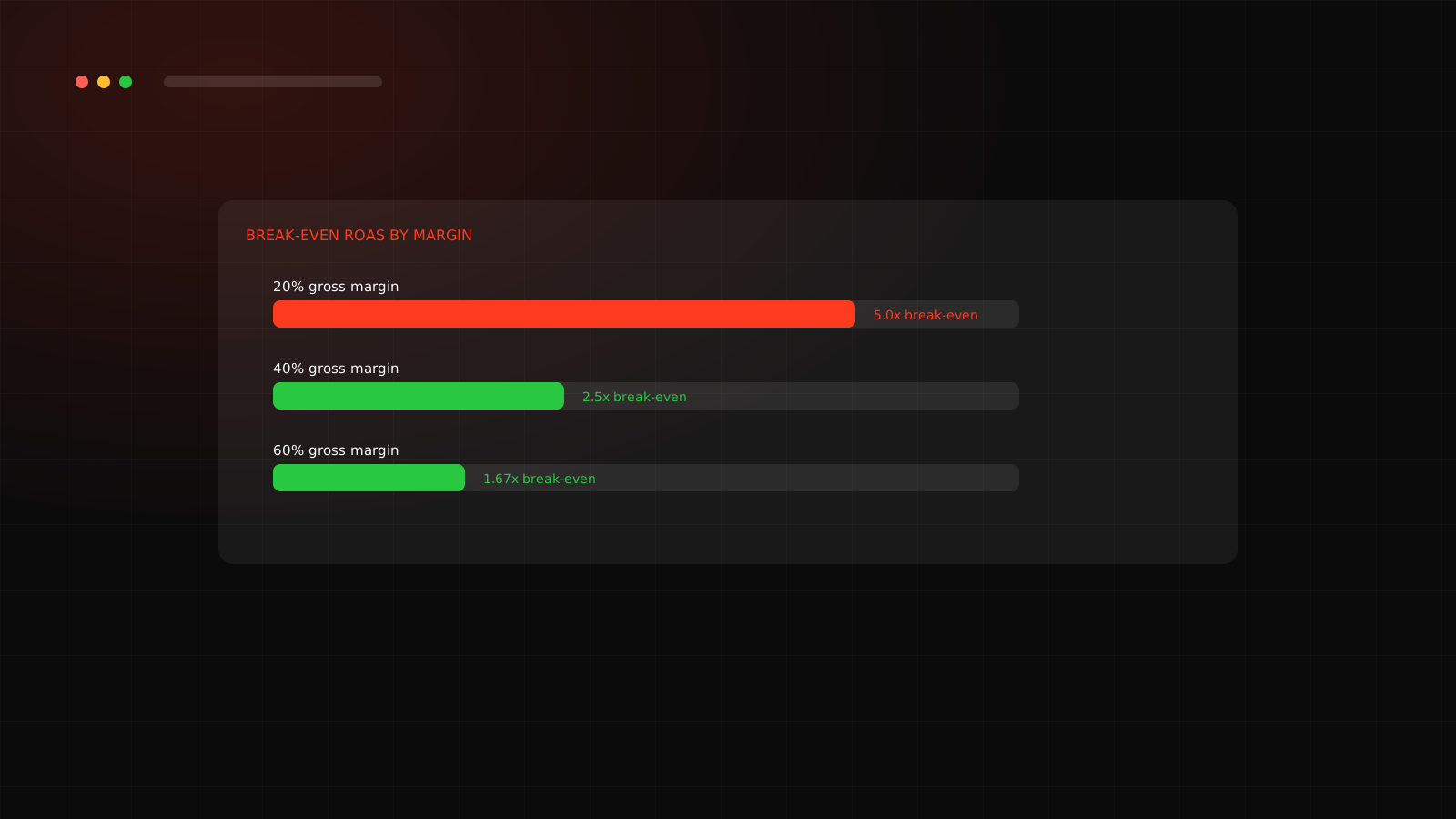
A benchmark does not tell you whether you are profitable. Your margin does. Break-even ROAS is 1 divided by your gross margin, where gross margin is the share of the price left after the cost of making and delivering the product.
| Gross margin | Break-even ROAS |
|---|---|
| 20% | 5.0x |
| 30% | 3.3x |
| 40% | 2.5x |
| 50% | 2.0x |
| 60% | 1.7x |
At the break-even point, the ads pay for themselves and nothing is left over. A good ROAS is above that line, with room for your other costs.
Benchmarks for Indian D2C
Many industry sources cite a healthy ROAS of roughly 3x to 5x for Indian D2C brands across Meta and Google, and a marketing efficiency ratio (total revenue divided by total marketing spend) of about 2.5 to 4. Treat these as directional. They come from industry blogs, and categories differ a lot.
Why a headline ROAS can mislead
- Cash on delivery returns. Orders that come back undelivered still count as revenue in your ad account. Read how COD returns change your numbers.
- Product returns and discounts. Refunds are rarely subtracted from ad-platform revenue.
- Overlapping credit. Meta and Google can both claim the same sale, so your platform ROAS adds up to more than your real revenue.
- GST and other costs. Meta bills GST on ad spend, which lowers your real return.
What to track instead of one number
Next, learn the other numbers in Meta Ads metrics explained, and the bigger picture in how to reduce CAC. Want a team to run this for you? See our Meta Ads agency service in Surat.
Want your real, profit-adjusted ROAS?
We rebuild it from delivered orders in the free audit.
Frequently asked questions
Return on ad spend: the revenue your ads produce divided by what you spent on them. A ROAS of 4 means ₹4 of revenue for every ₹1 of ad spend.
Many sources cite 3x to 5x as a healthy range for Indian D2C on Meta and Google, but your own break-even point matters more than any benchmark.
Divide 1 by your gross margin. If your margin after product cost is 40%, break-even ROAS is 1 ÷ 0.4 = 2.5.
Because ROAS ignores returns, shipping, GST and other costs. A high ROAS on orders that later come back is not profit.