The Subscription and Repeat-Order Playbook for Pet Care Brands
Pet consumption doesn't pause. Five tactics that turn that fact into a real repeat-order system instead of an assumption.
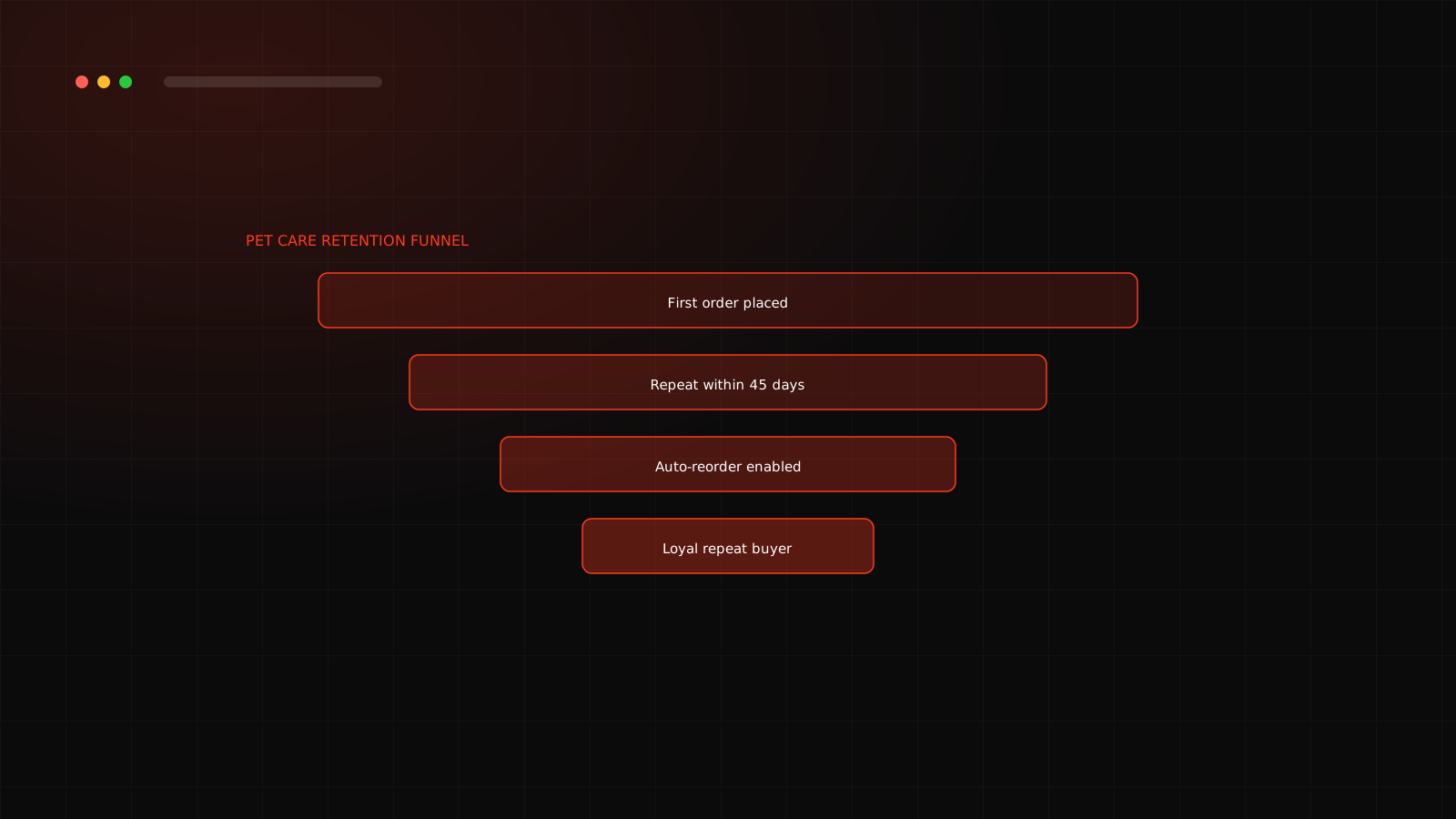
Pet care is one of the most naturally recurring categories in D2C, and also one of the most likely to under-build the system that captures that recurrence. Growth from a comparatively cheap acquisition channel can mask the gap for a while. It does not close it.
Why this category under-builds repeat-order infrastructure
A category still benefiting from lower auction pressure, as covered in the category growth piece, can grow for a while on new-customer acquisition alone. That growth pattern quietly hides a weak repeat-order system, right up until acquisition costs rise toward beauty or fashion levels and the brand discovers its retention foundation was never actually built.
Five tactics that work
Timing to consumption, not the calendar
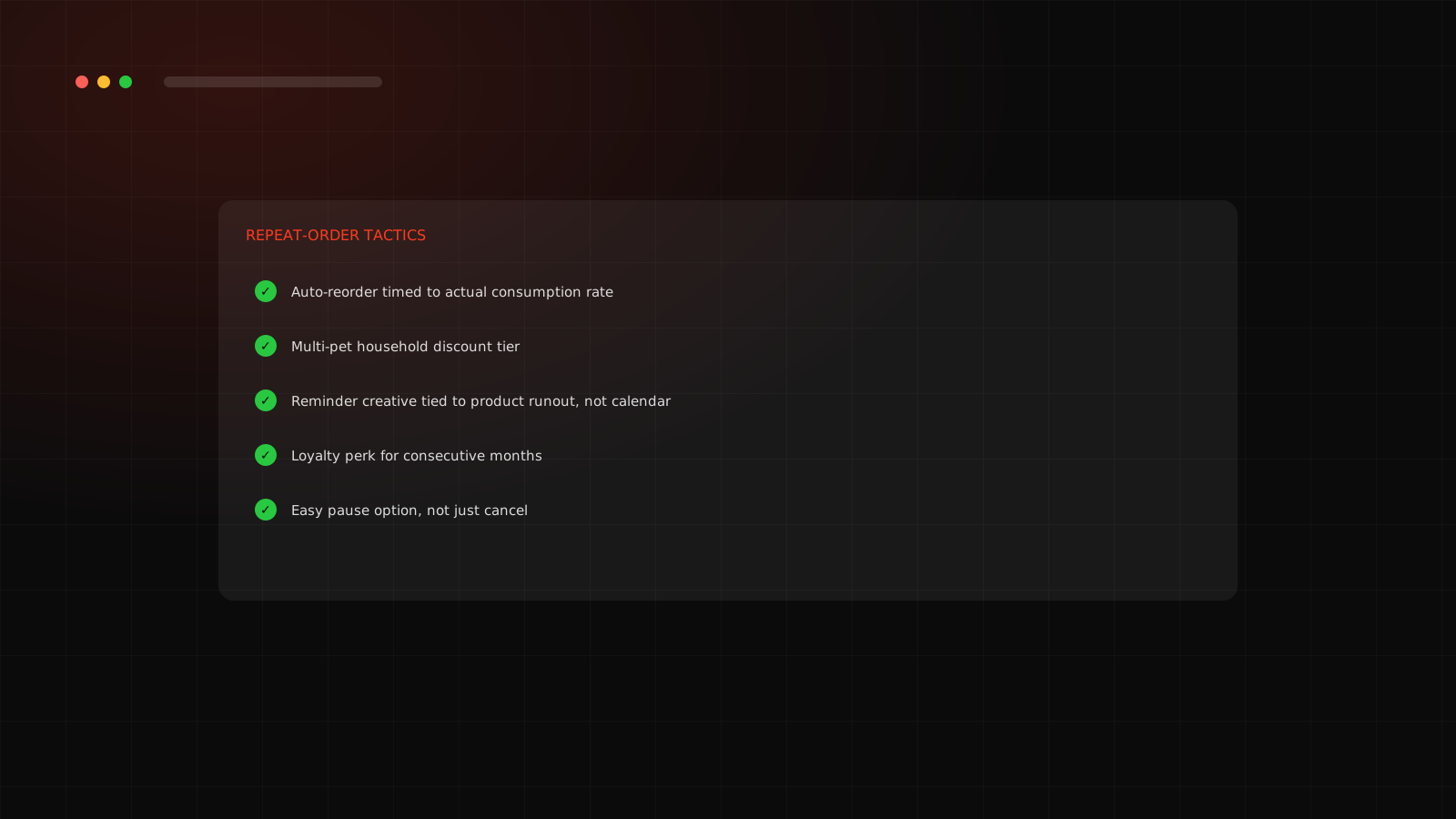
A 15kg bag of dog food consumed by a large breed runs out far faster than the same bag feeding a small one. Product-level and pet-size-level consumption data, even estimated reasonably rather than tracked precisely, produces a far more accurate reorder trigger than a generic monthly cycle applied identically across every SKU and every household.
The pause option that actually retains customers
Growing on acquisition alone and want the retention side built properly?
We build the repeat-order system before rising CAC makes it urgent.
See pet care CAC and retention benchmarks for the numbers this system is actually working toward.
Frequently asked questions
Often because early growth from a genuinely under-priced acquisition channel, covered in the category growth piece, masks the need for retention infrastructure. Cheap acquisition can carry a brand for a while before the lack of a real repeat-order system starts to show.
Timing the reorder reminder to actual consumption rate rather than a generic calendar cycle, since food, litter and consumable runout timing is genuinely predictable per product and per pet size.
No. Offering an easy pause option alongside cancel meaningfully improves retention, since owners often want a temporary break (travel, a vet-recommended diet change) rather than a permanent end to the relationship, and a forced binary pushes them toward canceling instead.