Pet Care CAC and Retention Benchmarks: What Healthy Actually Looks Like
Pet product consumption is inherently recurring. The brands that capture that early are the ones actually winning this category.
A pet care brand's first-order ROAS tells you almost nothing important. The category's entire economic logic runs through what happens after that first order, because a dog or cat's consumption needs do not stop after one bag of food.
Why retention matters more here than first-order ROAS
Pet food, litter, grooming consumables and most pet health products are used on a predictable, recurring schedule tied directly to the animal's actual needs, not a discretionary lifestyle choice that can lapse easily. That makes pet care one of the categories where a mediocre first-order ROAS can still support a genuinely healthy business, provided the retention system behind it is real.
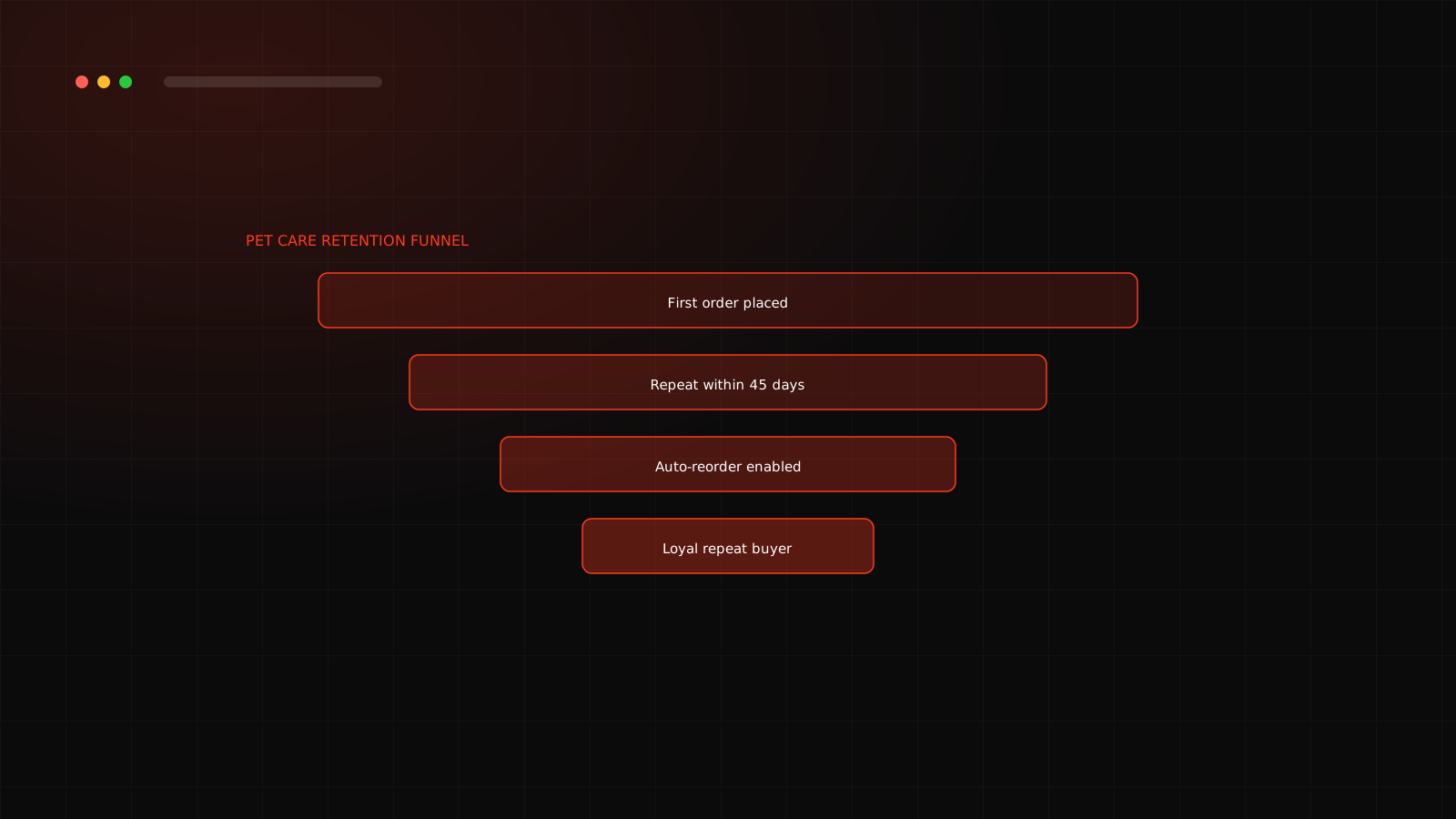
The four-stage retention funnel
The multi-pet household lever most brands ignore
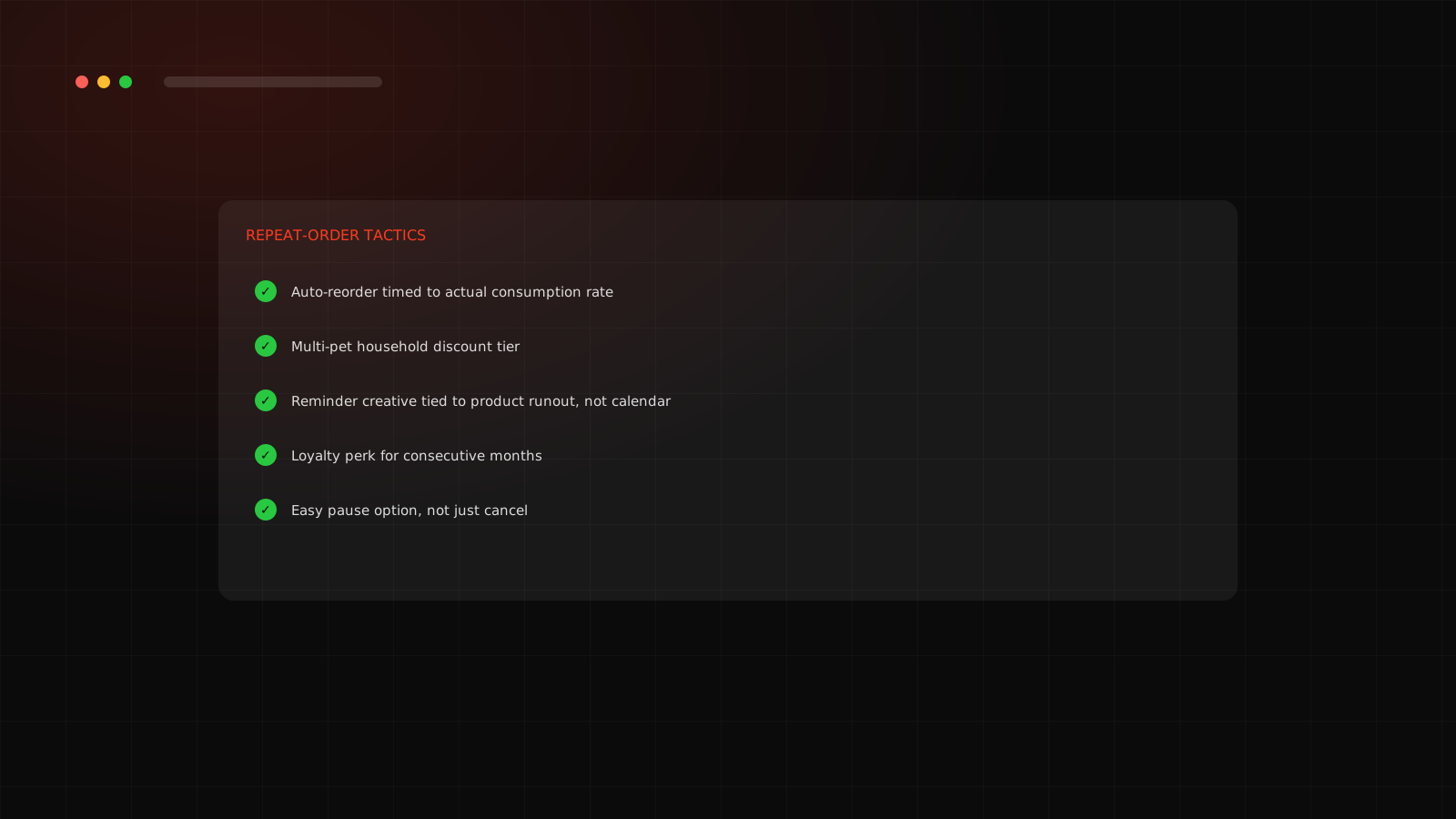
A meaningful share of pet-owning households have more than one animal, and default pricing and bundling built around a single pet leaves real order value on the table. A brand offering a genuine multi-pet discount tier, rather than forcing a customer to place two separate orders, captures more revenue from the same acquisition cost and removes friction that would otherwise push a second-pet purchase to a competitor entirely.
What good actually looks like
Given the category's structurally recurring consumption, a healthy pet care brand should see repeat-purchase rates meaningfully above what a comparable non-recurring category like home decor would consider strong. A brand not seeing that lift likely has a friction problem in the reorder experience, not a product-market fit problem, since the underlying consumption pattern is already working in its favor.
First orders strong but reorder rate underwhelming?
We diagnose the reorder friction, not just the acquisition funnel.
See the specific tactics behind this in the subscription and repeat-order playbook for pet care brands.
Frequently asked questions
Repeat purchase within 45 days of the first order is a strong early signal, since most pet food and consumable products are used up on a fairly predictable schedule within that window.
Yes, arguably one of the strongest natural fits in D2C, since pet food, litter and grooming consumables are used on a highly predictable, recurring schedule tied directly to the pet's needs rather than a discretionary lifestyle choice.
A meaningful share of pet-owning households have more than one pet, and a brand that prices and bundles for that reality (rather than assuming a single-pet default) captures higher order value from the same acquisition cost.