The Repeat-Purchase Playbook for Beauty and Grooming D2C Brands
A serum runs out in six to eight weeks. Most brands never build a system around that fact.
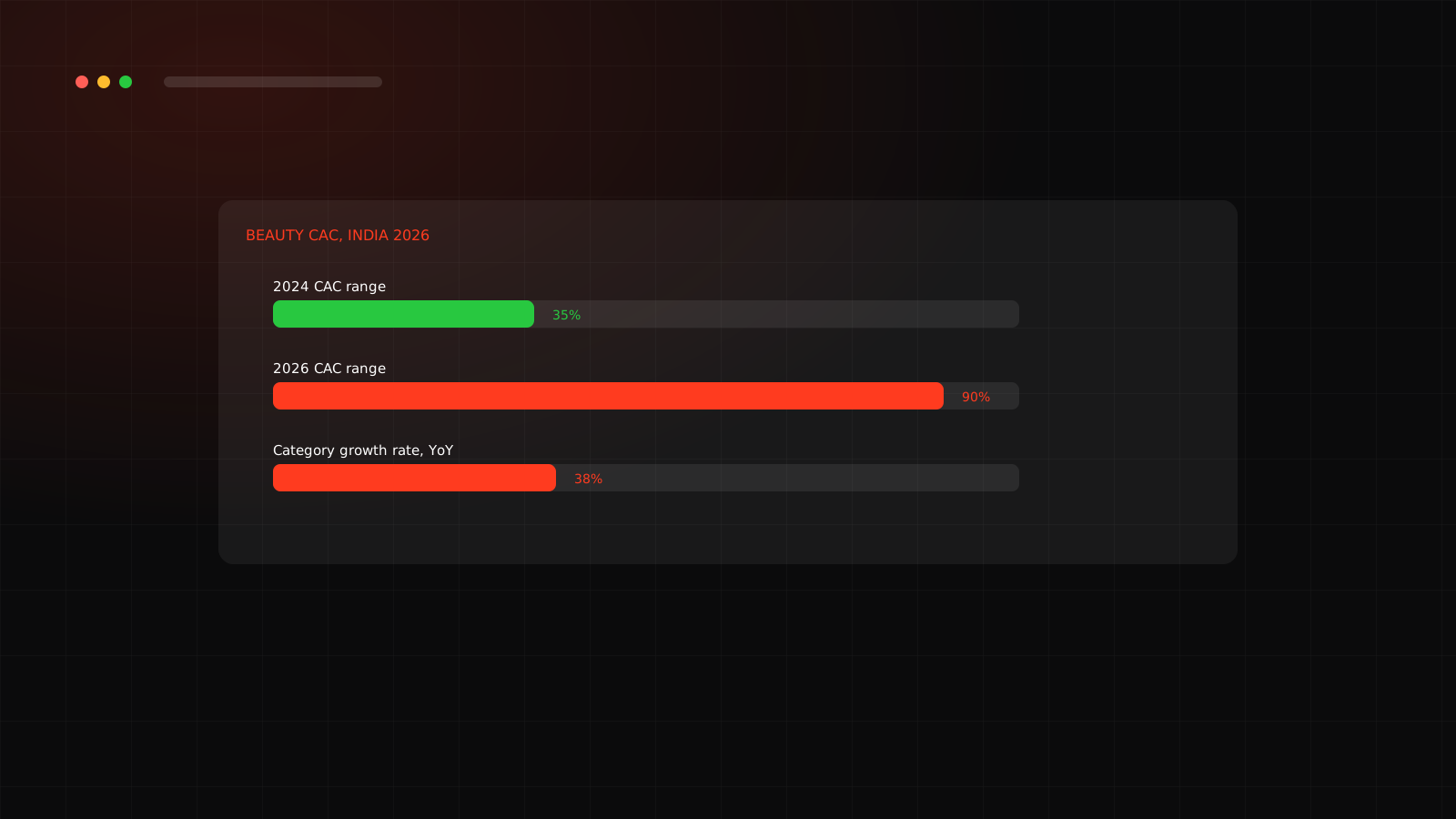
Beauty CAC in India has climbed to roughly ₹800-1,200 per customer. The brands still growing profitably inside that number are not the ones with the cheapest ads, they are the ones with the tightest repeat-purchase system.
The predictable runout window nobody plans around
A 30-60ml serum or moisturizer used daily runs out in a fairly predictable six to eight weeks. That window is knowable in advance, per product, which makes beauty one of the categories best suited to a precisely timed reorder system rather than a generic monthly reminder applied blindly across the whole catalog.
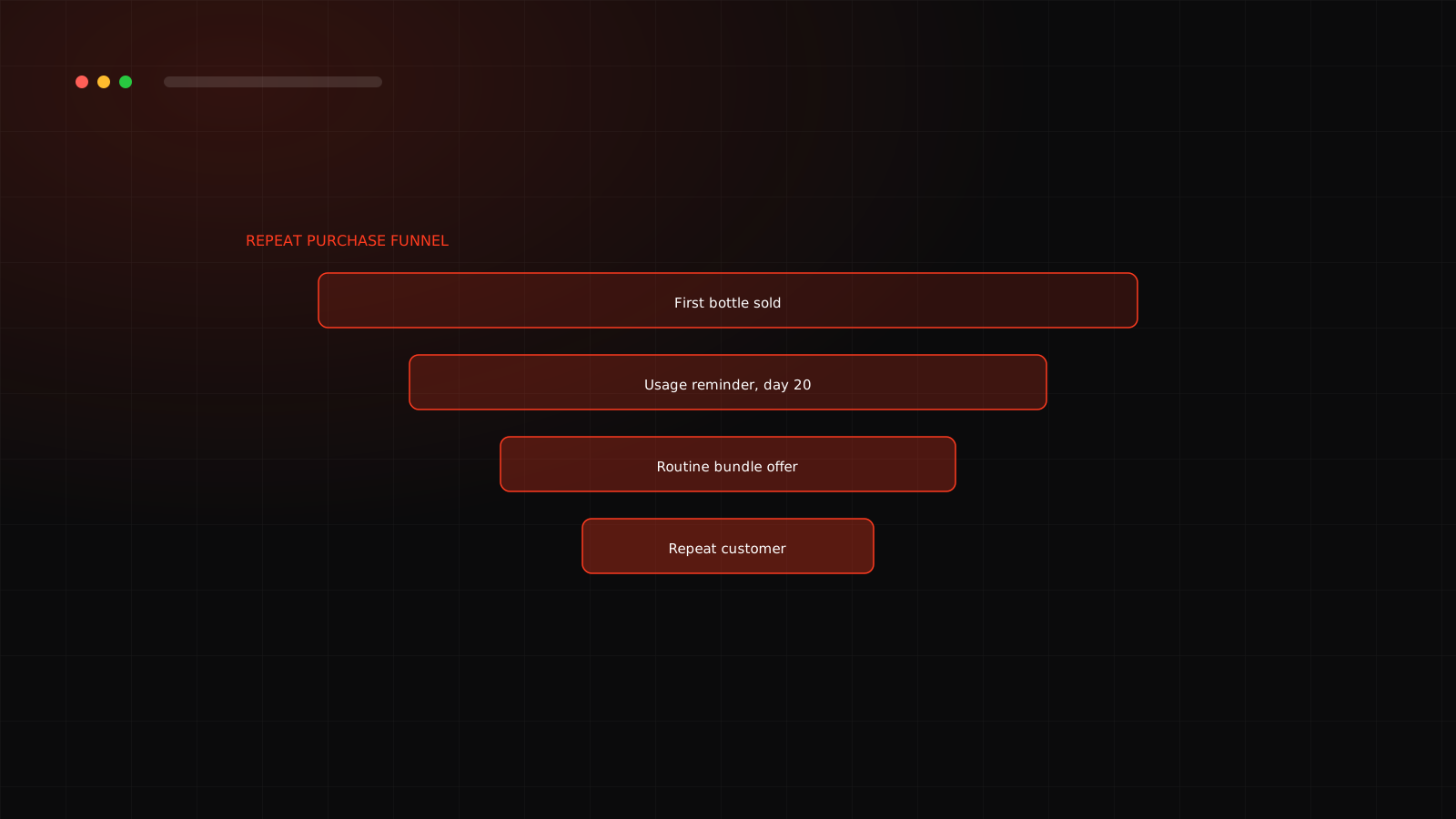
The four-stage funnel
Bundling versus subscribing, and when each wins
Subscription tends to win for a single, high-frequency item with a predictable, narrow reorder window, a daily serum being the clearest example. Bundling tends to win when a customer's routine naturally spans several products with staggered reorder timing, since a rigid subscription schedule fights against how the products actually get used. Most beauty brands benefit from running both, subscription for the anchor product, bundling for routine expansion.
The numbers that justify building this properly
If CAC sits at ₹1,000, a single-order customer needs to clear that entirely from one transaction to be profitable, which is a hard bar in a category with real cost of goods. A customer who reorders twice effectively divides that ₹1,000 across three transactions instead of one, turning a marginal first-order economics story into a genuinely healthy one without spending a single additional rupee on acquisition.
First orders converting but reorders falling off?
We build the reorder sequence around real product runout data, not a generic 30-day rule.
None of this compounds if the acquisition ads keep getting rejected. See the personal attributes trap nobody talks about before scaling spend.
Frequently asked questions
A standard 30-60ml serum or moisturizer used daily typically lasts six to eight weeks, which gives a reliable window for timing a reorder reminder or subscription renewal.
Subscription tends to win for single-product, high-frequency reorder items like a daily serum. Bundling tends to win for routine-based purchases where a customer wants several complementary products together but the reorder timing varies by item.
Enough to change the entire economics of a first order. If beauty CAC in India now sits around ₹800-1,200, a brand capturing even two or three reorders on that same acquisition effectively divides the real CAC per unit sold by two or three.