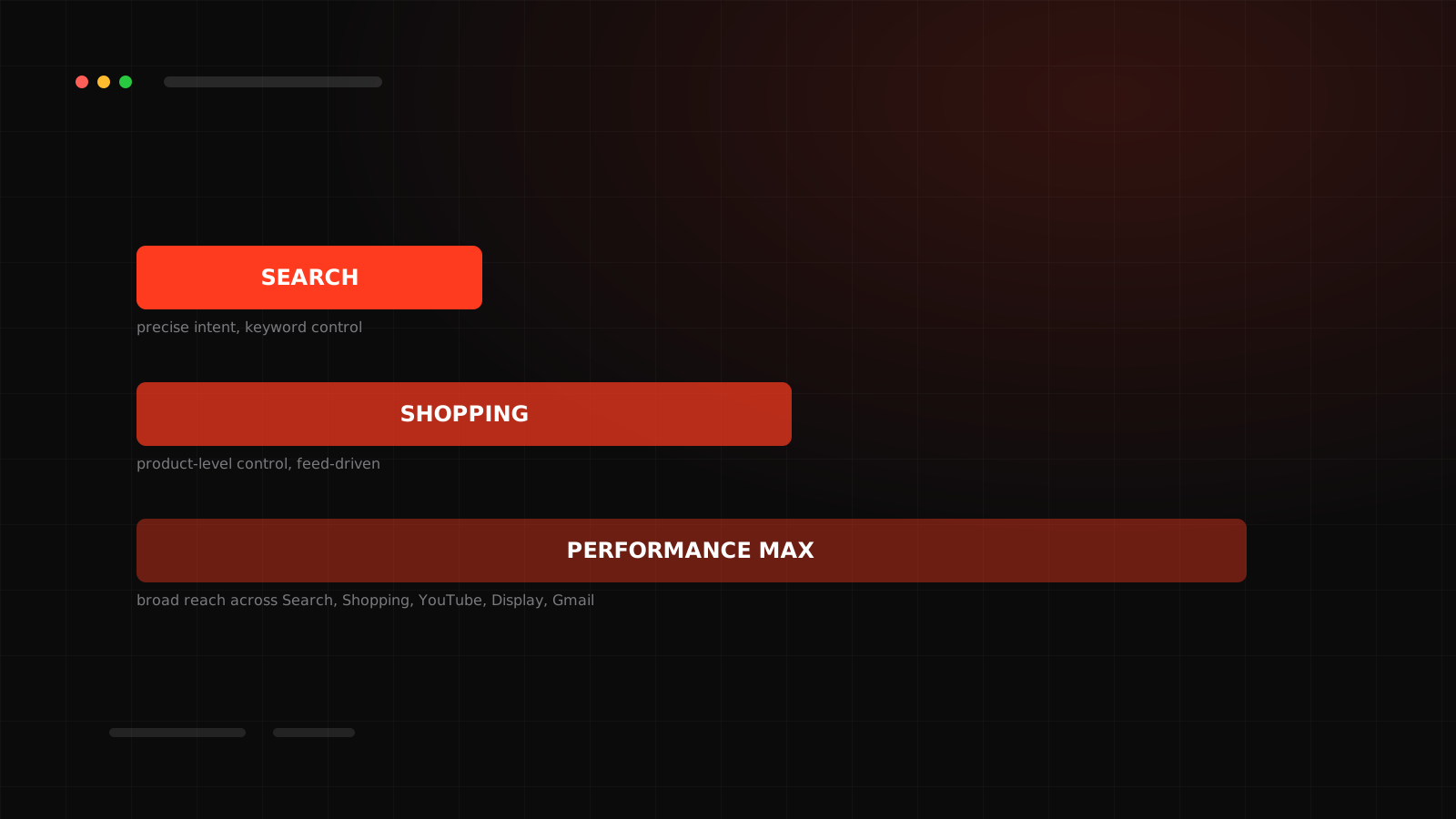
The Merchant Center Feed Checklist Nobody Follows
Shopping and PMax can only bid on what the feed tells them. Most feeds are quietly lying.
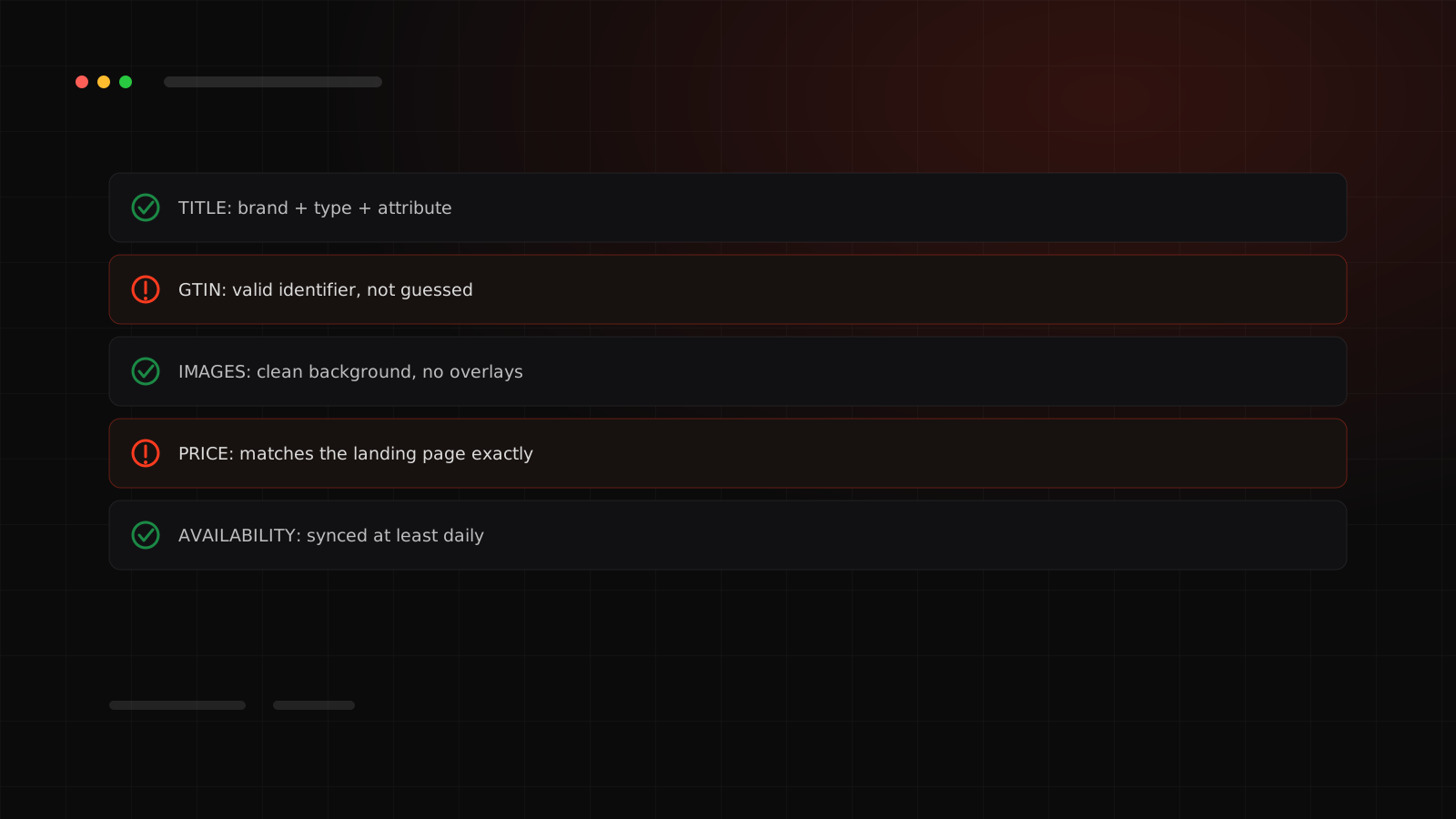
We audit feed health before we touch a single bid, on every account. It's not the exciting part of Google Ads, and that's exactly why most feeds are never actually checked once the initial setup is done. This is the checklist we run, written so you can work through your own feed with it.
Why this matters more than bidding
Shopping and Performance Max don't decide what to show based on your website. They decide based on your product feed, the titles, images, prices, availability and identifiers you submit to Merchant Center. A perfectly tuned bidding strategy sitting on top of a thin or wrong feed is optimising the wrong layer. Fixing the feed doesn't guarantee a better ROAS, that still depends on the product, the offer and the market, but a broken feed puts a ceiling on what any bidding strategy can achieve, no matter how well it's run.
The actual checklist
identifier_exists=false for genuinely identifier-less products: private label, custom, vintage or handmade goods.The GTIN mistake that's worse than having none
It's tempting to fill in a GTIN field with a plausible-looking number just to satisfy a required field. Don't. An incorrect identifier doesn't just fail silently, it can attach your product to the wrong listing entirely, or trigger a mismatch flag that suppresses the item. If a product genuinely has no GTIN, the correct move is declaring that explicitly, not inventing one.
What actually triggers disapprovals
Two patterns cause most of the disapprovals we see: missing required attributes (id, title, description, link, image, price, availability, and brand plus a valid identifier for most products), and a mismatch between what the feed says and what the landing page actually shows. Price and availability mismatches are treated seriously precisely because they're a direct trust failure for the shopper, not a technicality.
How often the feed actually needs attention
Pricing and stock levels need to sync at least daily, automatically, not manually. Titles, descriptions, categories and images are worth a full review whenever a product line changes meaningfully, and a spot-check across the catalogue on a regular cadence, since disapprovals and silent quality drops both accumulate quietly between reviews.
What a clean feed doesn't fix
A healthy feed removes a ceiling, it doesn't guarantee a floor. Creative quality, landing-page conversion and tracking accuracy still decide whether the traffic a clean feed earns actually turns into revenue. Feed work is the first check, not the only one.
Want your feed actually audited?
We check titles, identifiers, pricing sync and landing-page match before we touch a single bid.
Once the feed is clean, the next real decision is how to split budget across Search, Shopping and PMax. We cover that in where a D2C brand's Google Ads budget should actually go.