Why Ranking #1 on Google Doesn't Mean the Same Thing in ChatGPT
Two different games with two different scoreboards, and a page-one ranking doesn't automatically transfer.
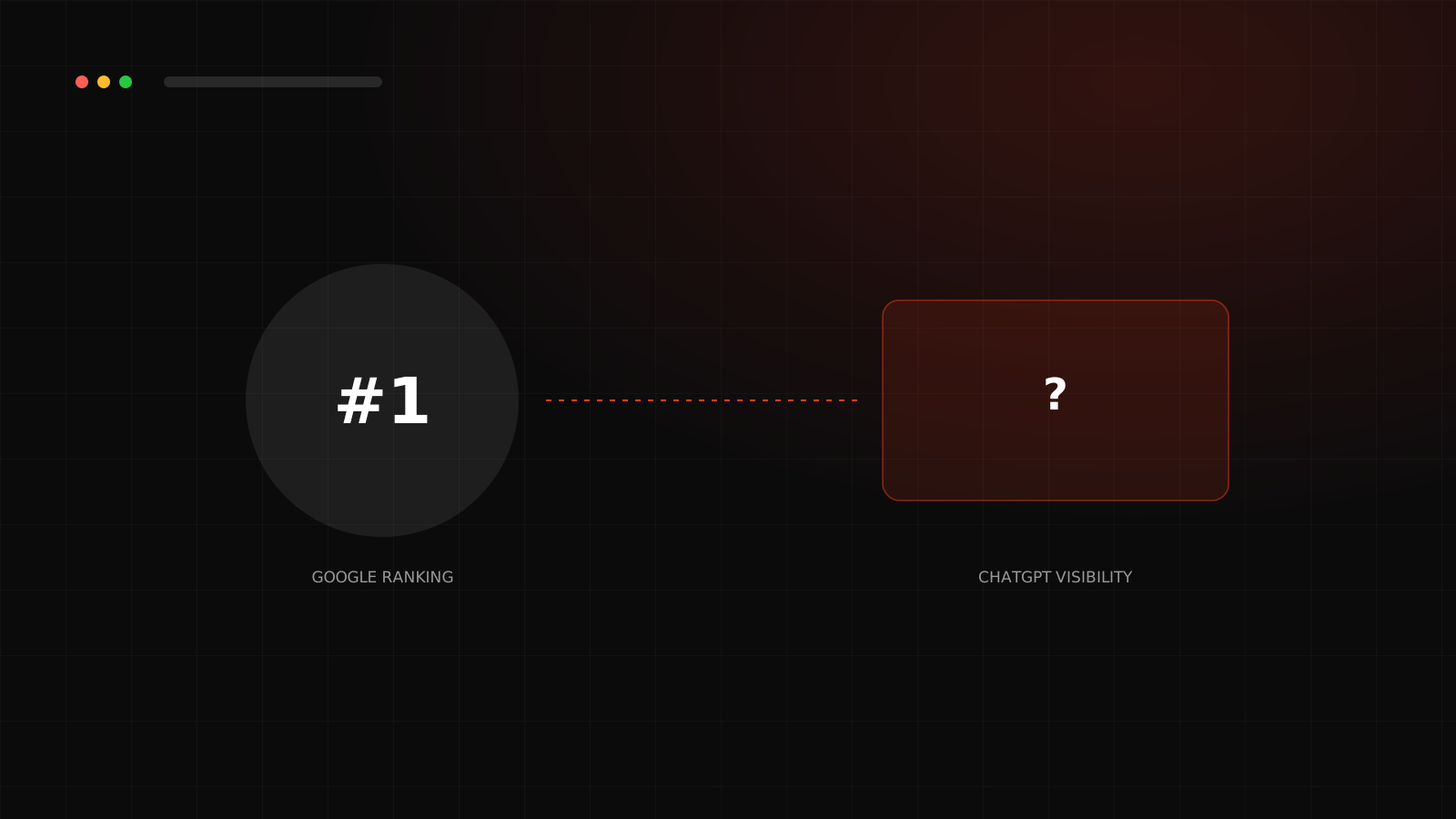
A founder who's spent two years earning a page-one Google ranking reasonably expects that authority to carry over into AI search. It doesn't automatically, and understanding why changes what to actually prioritize next.
Two systems doing genuinely different jobs
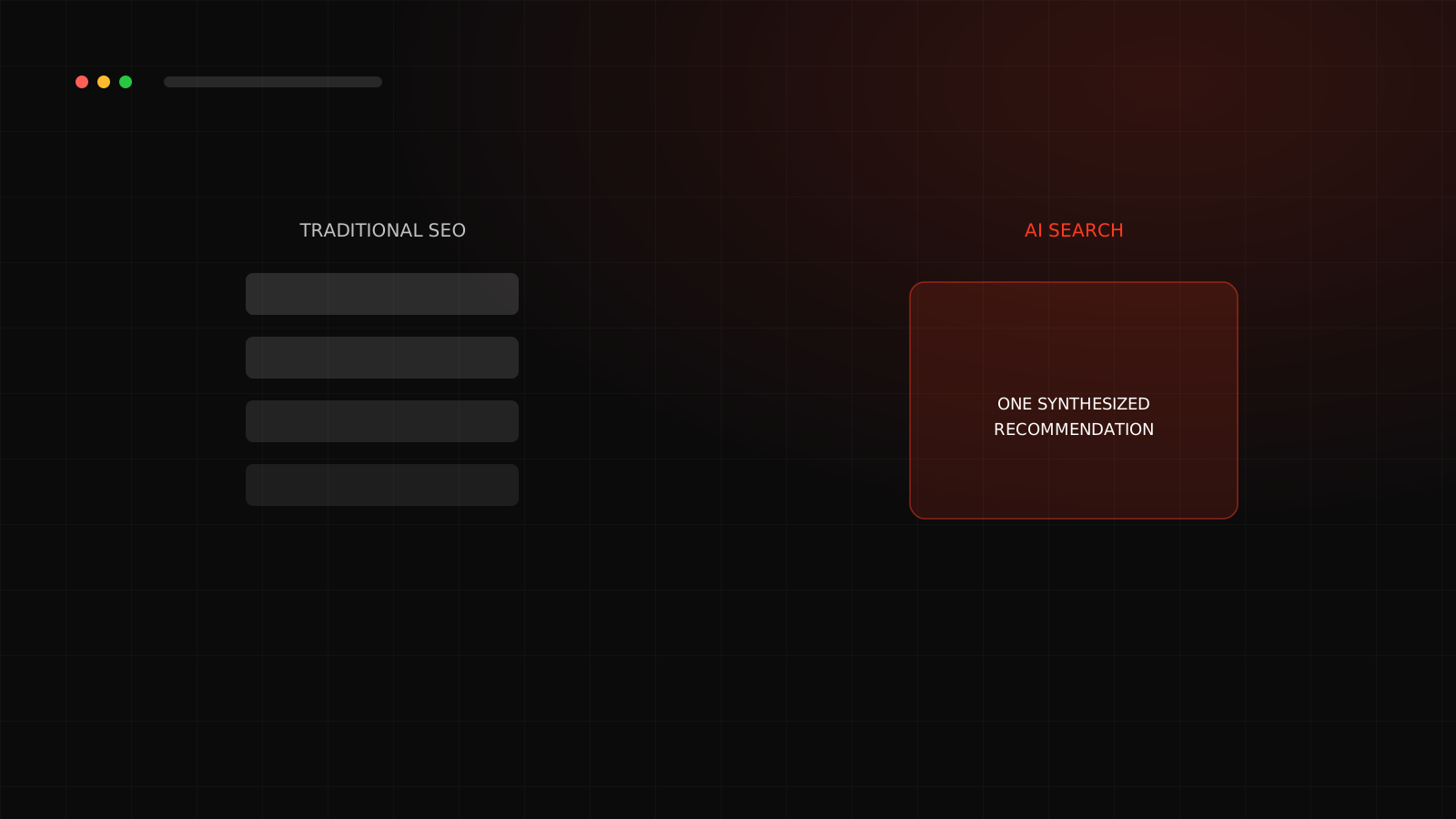
A Google ranking answers "which page is most relevant to this query, among all pages." An AI system answers a different question entirely: "given everything I can access, what's the most useful synthesized answer to give this specific person." The first hands over a link. The second hands over a conclusion, sometimes without naming its sources at all.
The overlap problem
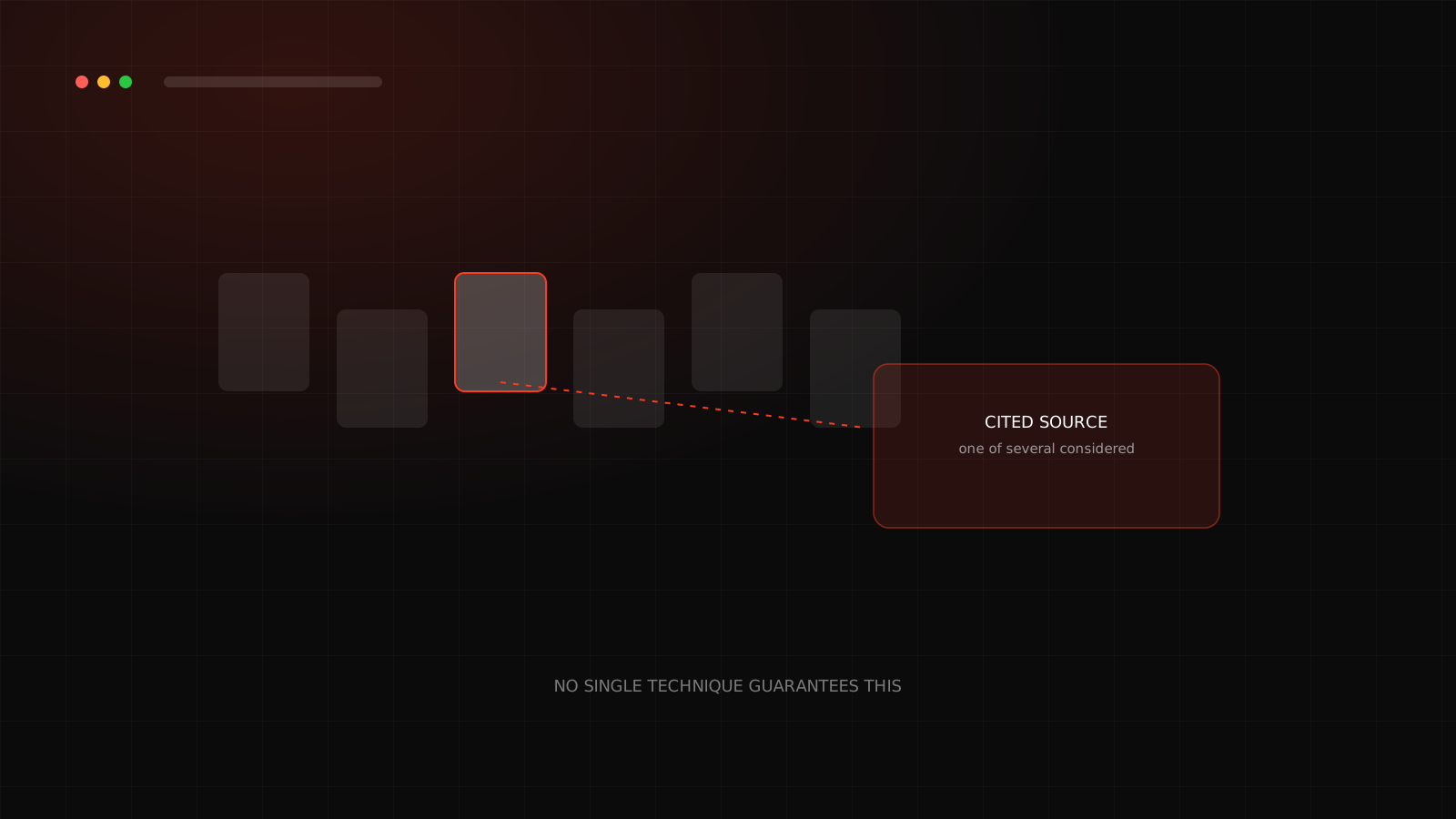
Independent analysis has found the overlap between top Google results and the sources an AI system actually cites can be much lower than intuition suggests, sometimes a small fraction of what ranks well in classic search. A page can rank first on Google and never get pulled into a synthesized AI answer, because the two systems weigh different signals: link authority and keyword match for one, topical relevance and extractable clarity for the other.
Why this actually happens
Google's ranking rewards a page that's the single best destination for a click. AI synthesis rewards a page that's the easiest to extract a specific, confident claim from, regardless of whether it's the most comprehensive resource on the topic. A shorter, more direct page sometimes wins the citation even against a longer, better-ranked competitor, simply because the direct answer sits closer to the surface.
What to actually check
Ask the AI systems your customers actually use the questions they'd ask before buying, and see whether your brand shows up, gets described accurately, or doesn't appear at all. That gap, between strong Google rankings and weak or absent AI visibility, is common and usually fixable with entity clarity and content restructuring rather than a full rebuild.
The practical response
Don't abandon SEO, it's still the foundation. Add a second, explicit check for AI visibility rather than assuming Google performance covers it. The two disciplines share technical roots but diverge enough in what gets rewarded that treating them as identical leaves a real gap unaddressed.
Tracking both without doubling your workload
Most teams already have a rhythm for checking Google rankings: a rank tracker, a weekly glance at Search Console. AI visibility needs the same discipline, not a separate department. A short, repeatable list of the actual questions your buyers ask, checked monthly across the AI systems they use, catches drift in either direction before it becomes a real gap.
Want to know your actual AI visibility gap?
We'll check what AI systems say about your brand, not assume Google covers it.
For the mechanics of what actually changes between the two disciplines, see LLM SEO vs traditional SEO.