UGC and Creative for Home Fragrance Brands: The Unboxing Problem
You can't smell a video. Here's how the best home fragrance creative solves that problem anyway.

Every other product category can show the thing it's selling. Home fragrance cannot. A video of a candle burning conveys almost nothing about what it actually smells like, which forces the creative to work entirely through proxy.
The fundamental problem this category has to solve
The core attribute a customer is buying, the scent itself, is literally unconveyable through the medium the ad runs in. Every other lever in the creative, texture, packaging, room mood, language, has to do the work that a direct product demonstration would do in almost any other category.
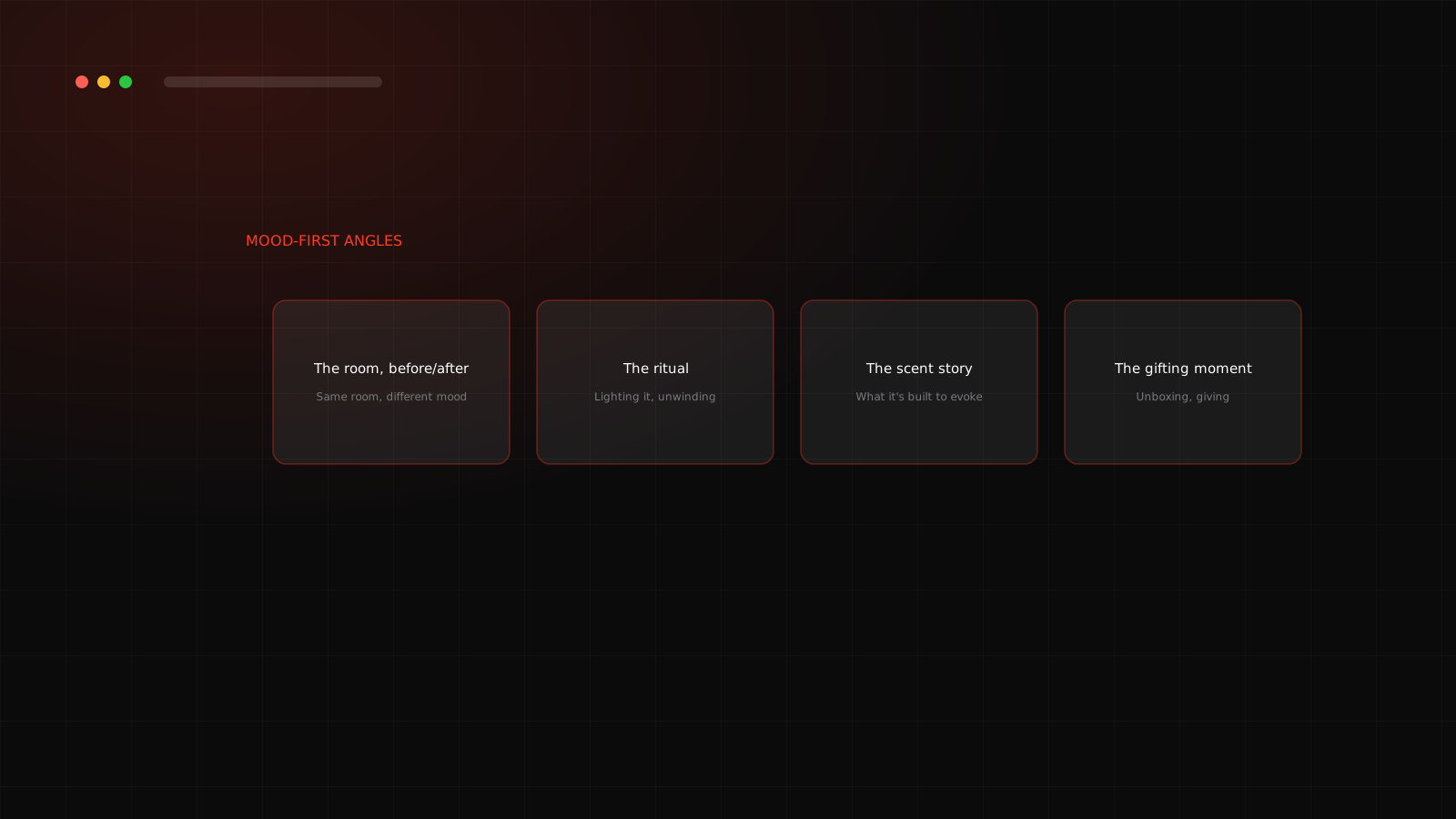
Four angles that work around it
Describing a smell in words, without sounding like a wine label
Packaging as a proxy for scent quality
Because the actual scent is unconveyable, packaging and unboxing presentation carry more persuasive weight in this category than in almost any other D2C vertical. A slow, deliberate unboxing shot is not filler content here, it is doing real work as a stand-in for the product quality signal the medium cannot otherwise provide.
Struggling to make an unconveyable product feel tangible on screen?
We build creative around the proxies that actually move this category.
A meaningful share of this creative work pays off hardest around gifting seasons. See the gifting and seasonal playbook for home fragrance brands.
Frequently asked questions
Because the core product attribute, how it smells, cannot be conveyed directly through a video or image at all, unlike a visual product where the creative can show the thing being sold. The creative has to work entirely through proxy: texture, packaging, room mood and language.
Through sensory and evocative language tied to a feeling or memory, rather than a technical note list, which tends to read as more like a product spec sheet than something that helps a viewer imagine how it would actually smell.
Yes, more than in most categories. Since the actual scent cannot be conveyed on screen, packaging and presentation become one of the strongest available proxies for perceived quality, making a slow, deliberate unboxing shot genuinely persuasive.