The Subscription Model Playbook for Condition-Led Ayurvedic Brands
Ayurvedic formulations work on a cycle, not a single purchase. The subscription mechanic should match that cycle exactly.
A generic subscription discount bolted onto checkout rarely holds up in Ayurveda, because the category's actual usage pattern does not match a generic monthly cycle. The brands with strong retention build the subscription mechanic around the real timeline the formulation needs, not a borrowed default.
Matching the subscription to the real formulation cycle
Different condition-led formulations genuinely need different cycle lengths to show effect: a digestive blend might show change within weeks, a metabolic or hair-health formulation often needs a full quarter of consistent use. Applying the same 30-day renewal to both ignores that difference and sets up a mismatch between when the customer expects to feel something and when the next charge actually happens.
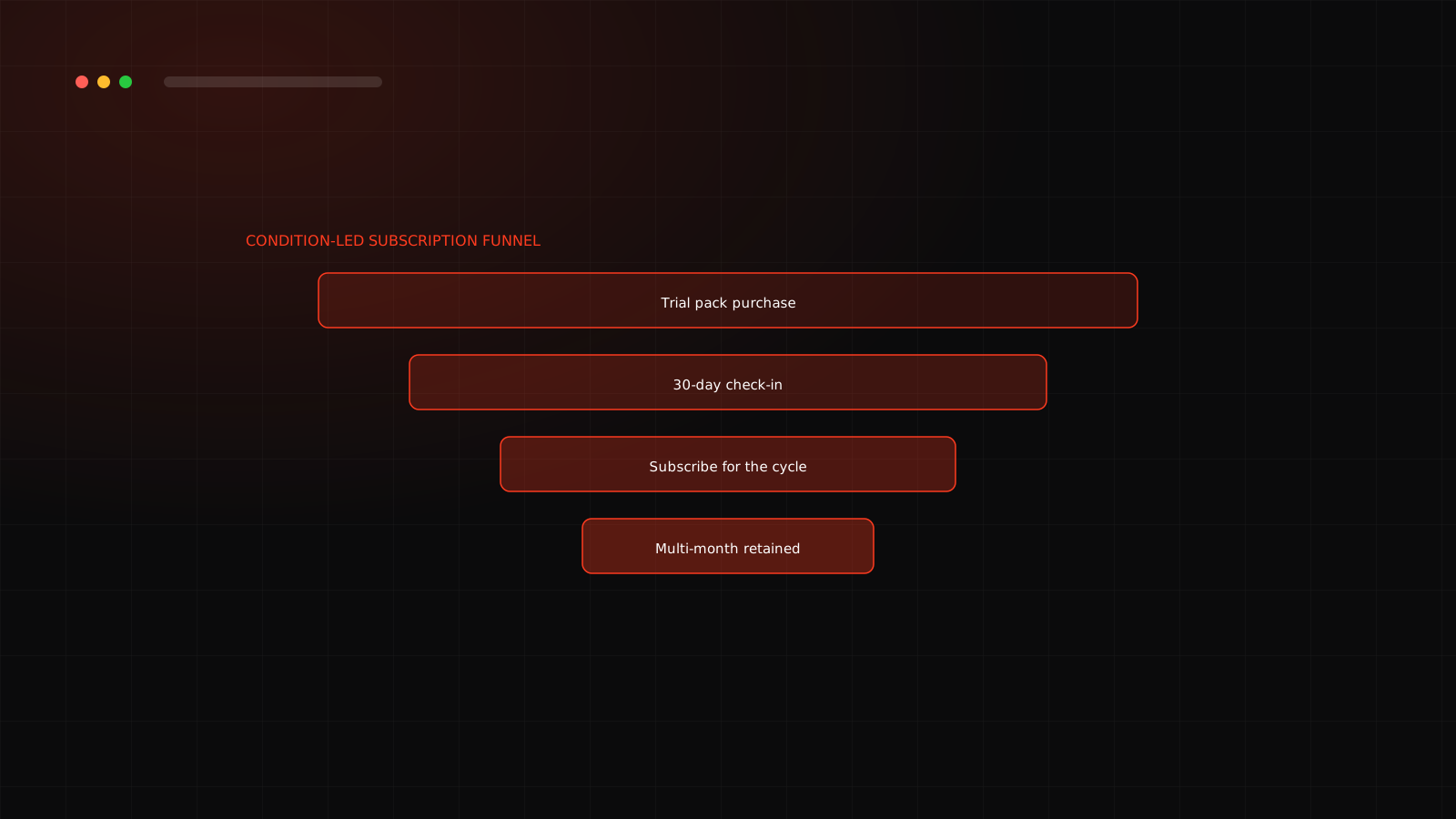
The four-stage funnel
Why the 30-day check-in matters more than the sale
What good retention actually looks like here
Because the category's honest value proposition is a slow, cumulative effect, retention through three or more cycles is a more meaningful health metric than first-cycle conversion alone. A brand converting well on the trial pack but losing most customers after one cycle likely has a mismatch between the promised timeline and the subscription structure, not a product quality problem.
Subscription churning after one cycle?
We rebuild the renewal timeline around your formulation's actual cycle, not a template.
None of this retention work matters if the acquisition ads funding it keep getting rejected. See Meta ads for Ayurvedic brands for the compliance foundation first.
Frequently asked questions
It should match the formulation's real, typical timeline to show effect, usually somewhere in the range of one to three months depending on the specific product, rather than defaulting to a generic 30-day cycle borrowed from an unrelated category.
A deliberate touchpoint partway through the first cycle, checking in on the customer's experience before the renewal decision, rather than staying silent until the reorder prompt. It catches early doubt before it turns into silent churn.
Multi-cycle retention, a customer completing three or more subscription renewals, since that is roughly the point where the category's typical slow-build results have had time to actually show and reinforce the habit.