What Changed in Meta Ads Attribution in 2026
Two changes since January have quietly moved the numbers in every Meta Ads account. Here's what changed, who it affects, and what to check.
If reported conversions in your Meta Ads account have looked different this year without any campaign, budget or creative change on your end, this is very likely why. Two separate changes moved how Meta counts and reports conversions in 2026, and neither one touched your actual sales. This is a dated summary of what changed, sourced to industry reporting rather than assumption, current as of late August 2026 and worth re-checking if you're reading it much later.
January 12: two attribution windows disappeared
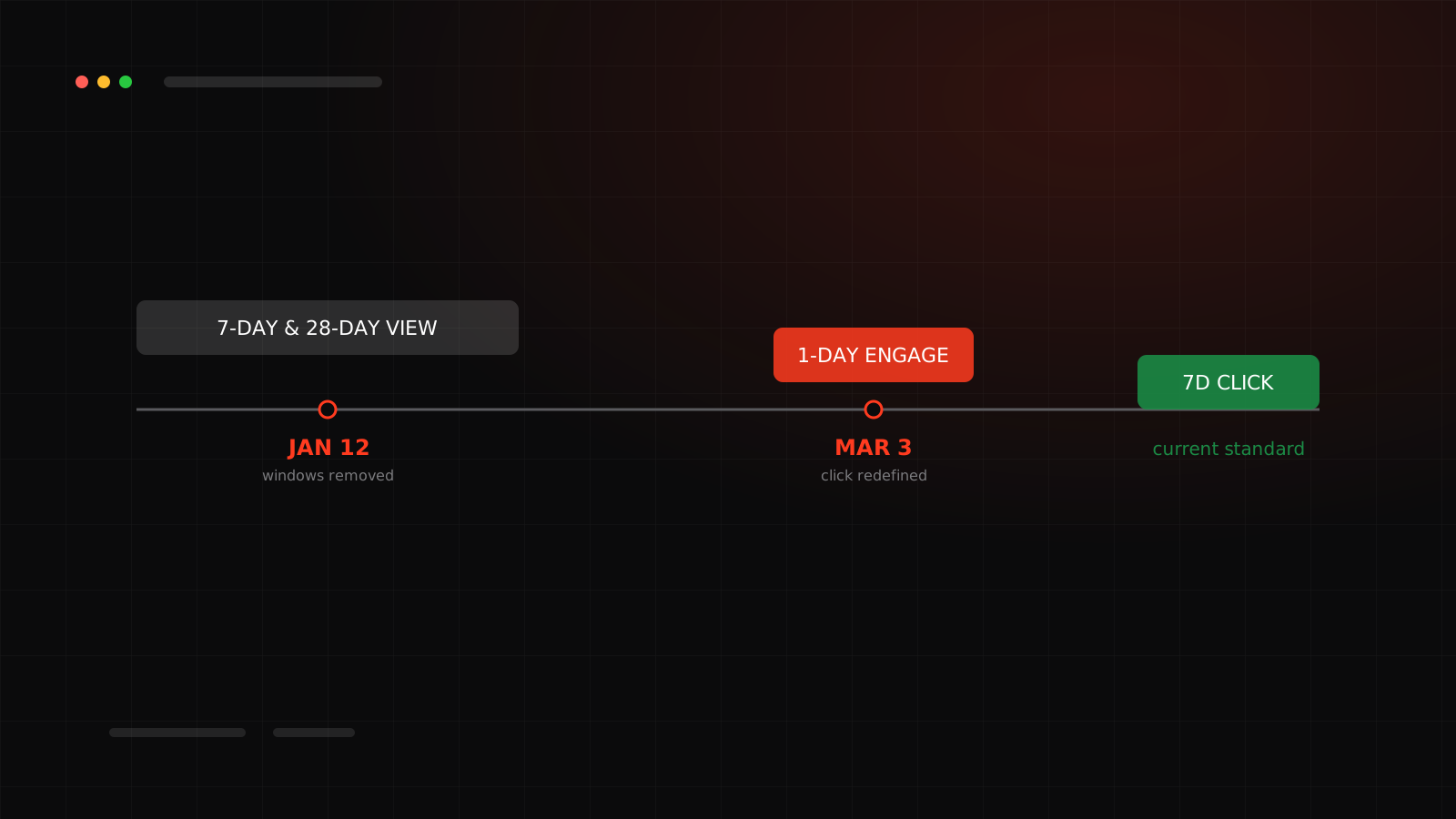
On January 12, 2026, Meta removed the 7-day view and 28-day view attribution windows from the Ads Insights API. Those windows, which counted a conversion as attributed to an ad if someone saw (not clicked) the ad up to 7 or 28 days before converting, simply stopped returning data. The new standard window became 7-day click plus 1-day view.
The practical effect reported by multiple sources: accounts still pulling reports using the old view-window parameters saw reported conversions drop, in some cases by 15–40%, without any change to what actually happened on the website. Deprecated windows reportedly return empty data silently rather than an error, which is the part that catches teams off guard, a broken report doesn't announce itself as broken.
Reporting also indicates historical data access is now capped, roughly 13 months for unique counts and 6 months for frequency breakdowns, which matters if you're pulling year-over-year comparisons.
March 3: what counts as a click changed
On March 3, 2026, Meta reportedly restructured how it defines a "click" for attribution purposes. Click-through attribution now requires an actual link click, something that sends someone to a website, app or lead form. A new category, "engage-through attribution," was introduced to cover everything else, likes, shares, saves, comments and bookmarks, but it carries only a 1-day window, down from the up-to-7-day window those interactions could previously fall under as part of click-through.
The stated purpose, per reporting on Meta's own explanation, was to reduce the reporting gap between Meta Ads Manager and third-party tools like GA4, which never counted a "like" as a click to begin with.
Why your reported conversions moved without you touching anything
Both changes work the same way mechanically: they shrink the amount of time (or the range of actions) that can count as attributed to an ad. Fewer days and fewer action types both mean fewer conversions get credited to Meta, even when the underlying sale happened exactly as before. This hits engagement-heavy content and longer-consideration purchases hardest, since those are the campaigns most likely to have relied on the wider windows Meta just narrowed.
What hasn't changed
Your actual sales didn't change. Your website's real order count didn't change. And the fundamentals of tracking quality, whether CAPI and pixel are deduplicated, whether Event Match Quality is healthy, are a separate topic from this one; we cover that reconciliation process in detail here. This article is specifically about the reporting window and click-definition changes, not about whether your pixel or CAPI setup is broken.
Who's most affected
| Campaign type | Likely impact |
|---|---|
| Direct-response, short consideration (most D2C) | Modest, most conversions already fell within the new 7-day click window |
| Brand awareness / video view campaigns | High, these leaned on the removed view-through windows |
| B2B, long sales cycles | High, longer paths to conversion are more likely to fall outside 7-day click and 1-day view |
| Engagement-led campaigns (saves, shares, comments) | High, now capped at a 1-day engage-through window |
What to check in your account this week
Not sure if this explains your numbers?
We'll reconcile your account against real orders and tell you exactly what moved and why.
If this is the first time you're checking whether Meta's reported numbers match reality, start with the reconciliation test, it's the baseline every account should be run against, window changes or not.